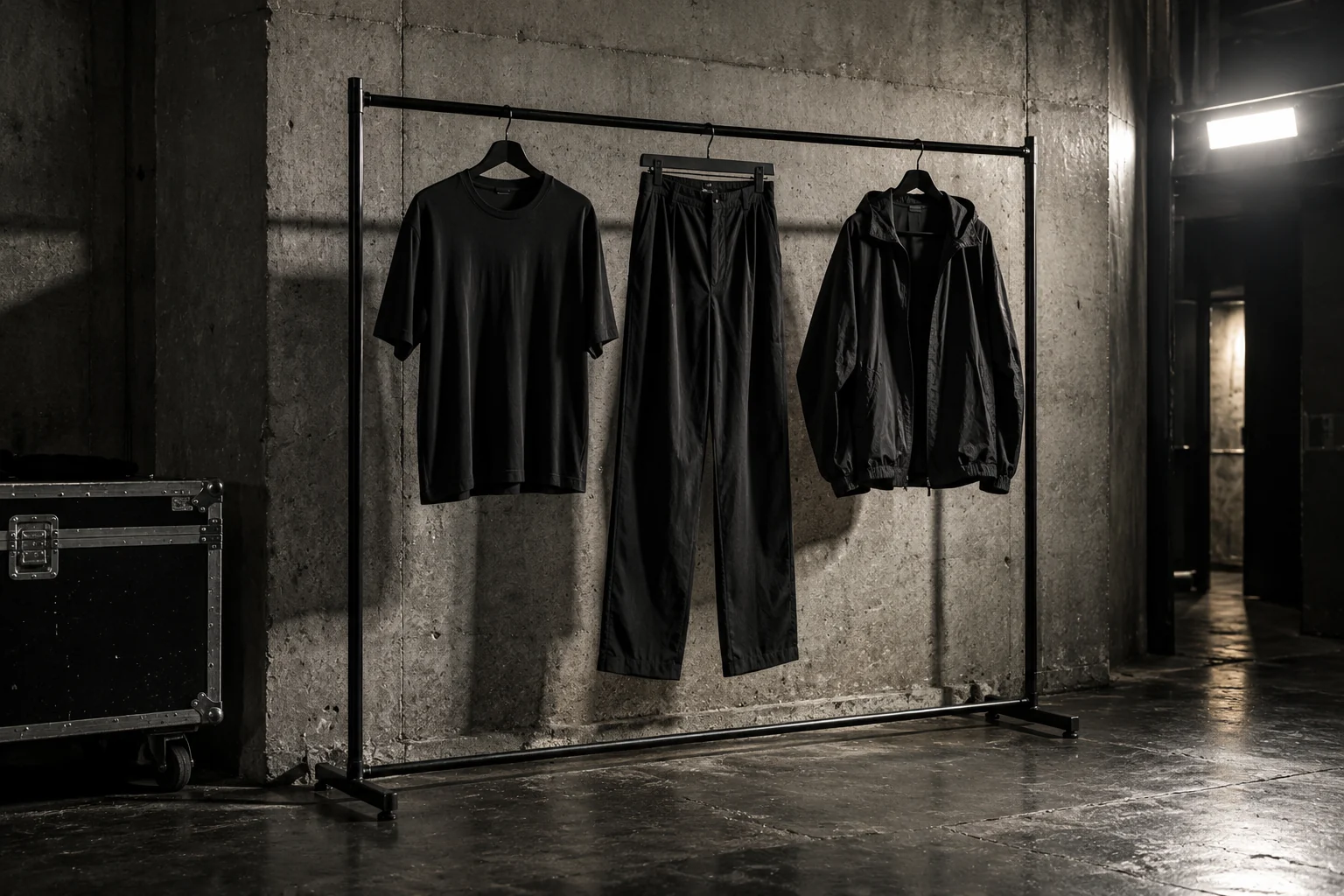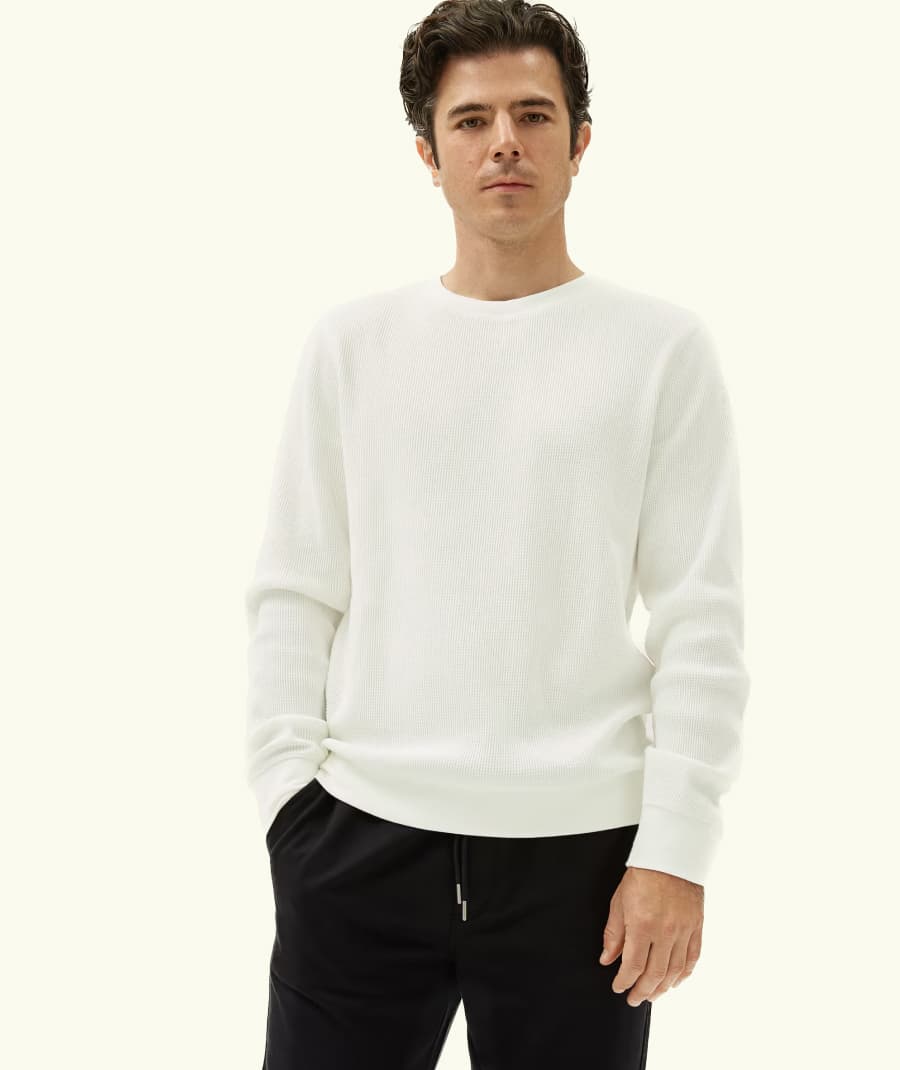

Futuristic Outfits You Can Wear Every Day
One unfamiliar line can change a familiar outfit. Work with asymmetry, cut-outs, pocket structure and surfaces, then choose how far you want to take the look.
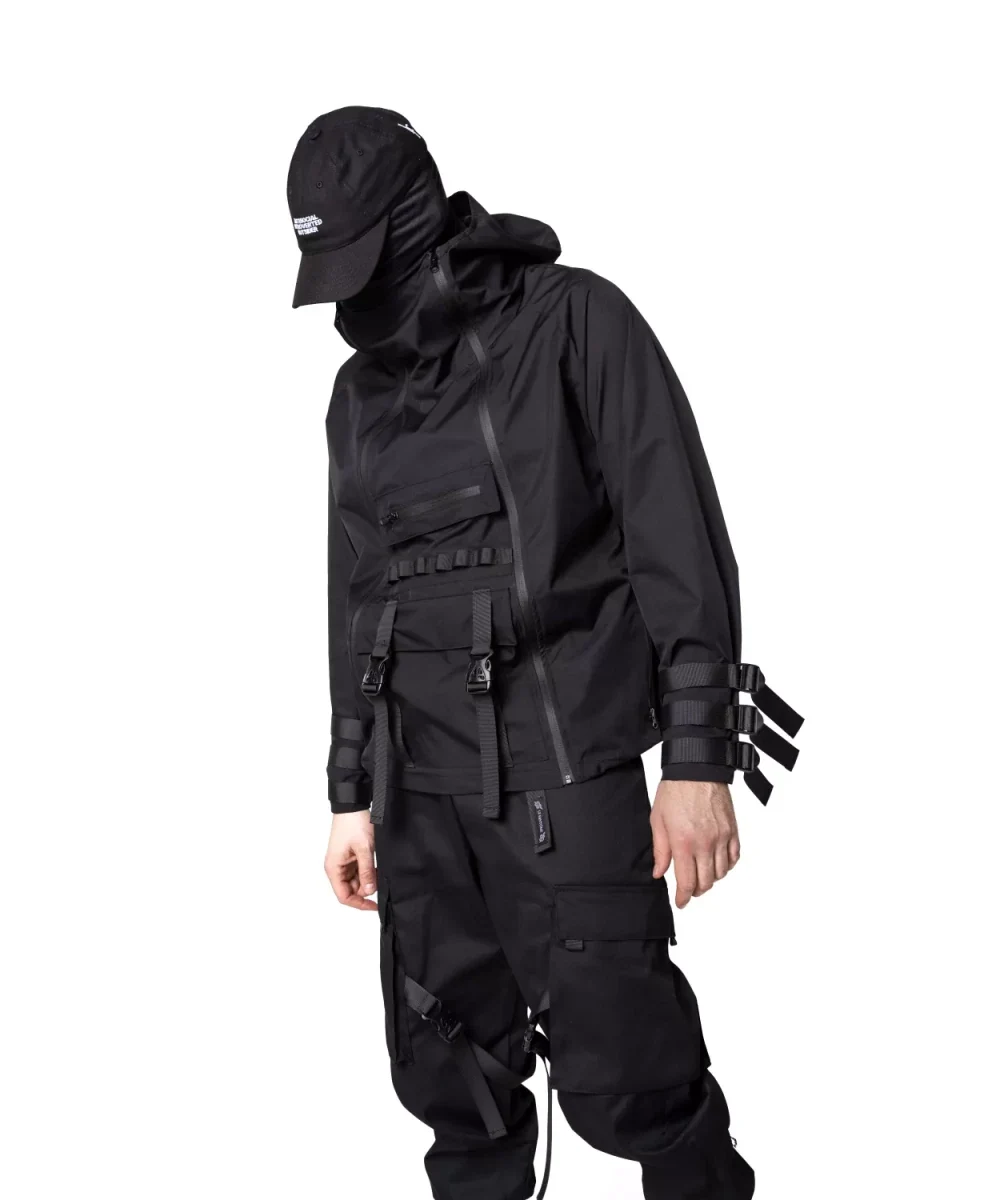
A diagonal closure interrupts a familiar jacket. A cut-out breaks a continuous surface. A pocket stands away from the leg. Small changes in construction can make an outfit feel unfamiliar without changing every piece.
Build a futuristic outfit around one clear departure from your usual silhouette, then choose the layers and details that support it. It might be an asymmetric line, an open section or a more sculptural leg. Try it with the clothes and footwear you already use before building a whole new combination.
Choose the line that leads
Look at the outfit as a shape before looking at its individual accessories. Where is it widest? Which edge cuts across the body? Is the most visible detail at the collar, waist or leg?
When exploring futuristic clothing, choose one feature to lead the first version: a diagonal front, a broad pocket panel, an unusual hem or an opening in the upper layer. Leave enough plain surface around it that the change remains visible.
This gives you a way to edit. If a new piece covers the line you wanted to show, change its length or position. If two features compete, decide whether you want that density or a clearer centre.
Direction one: a sculptural lower half
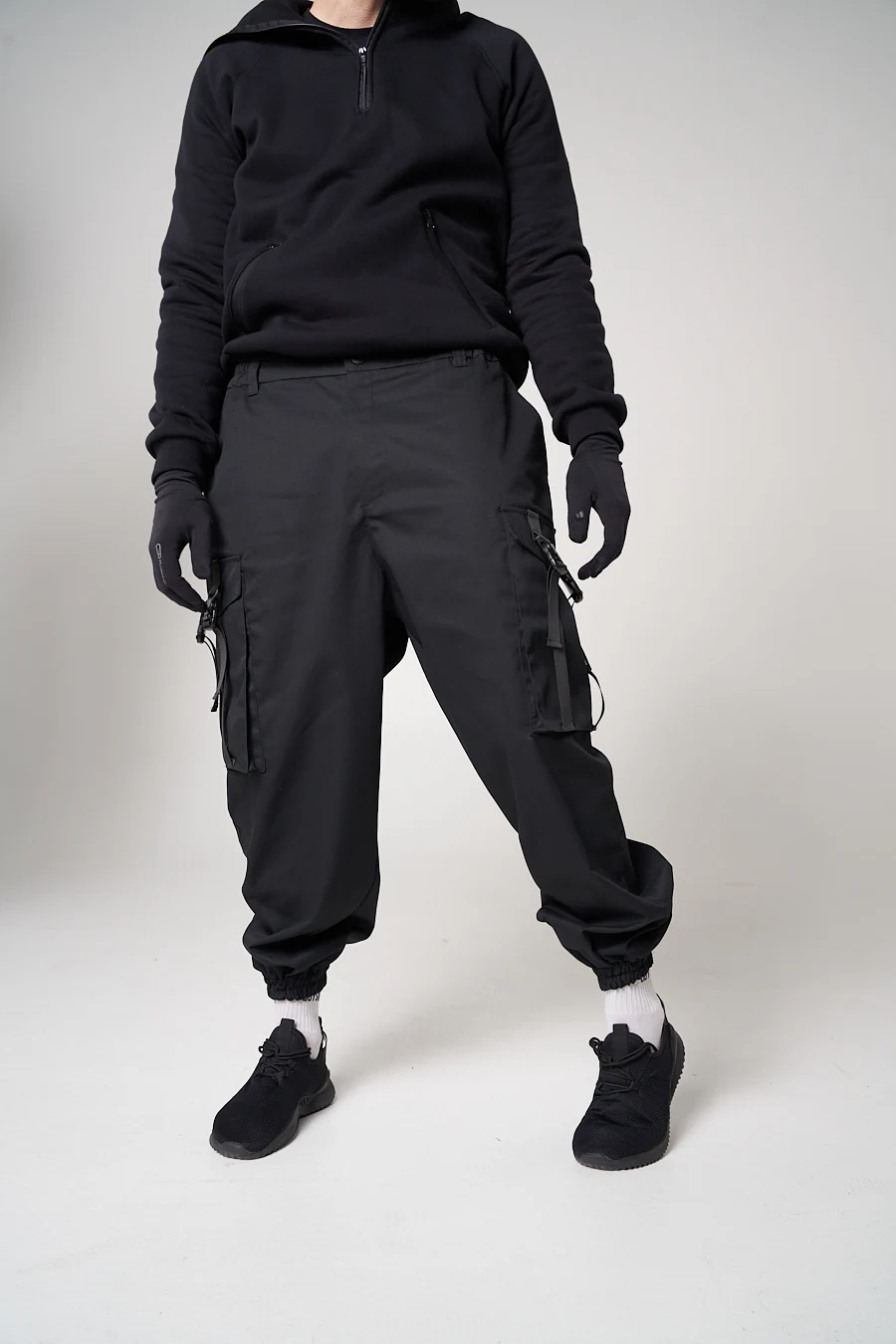
Keep the upper body relatively simple and let the trousers create the unfamiliar shape. A generous leg, a substantial side pocket or a panel that changes the outline can make a plain T-shirt feel different.
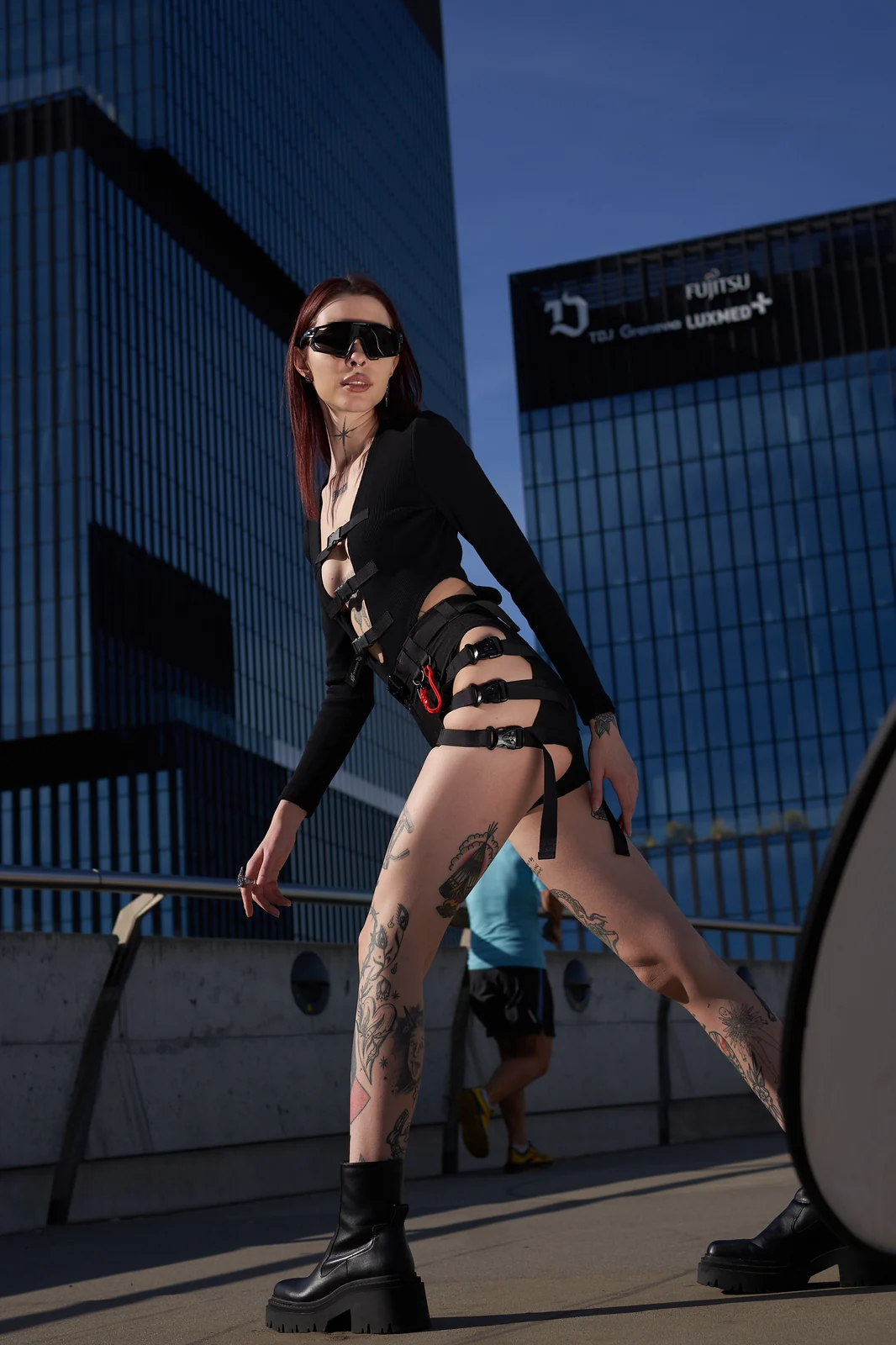
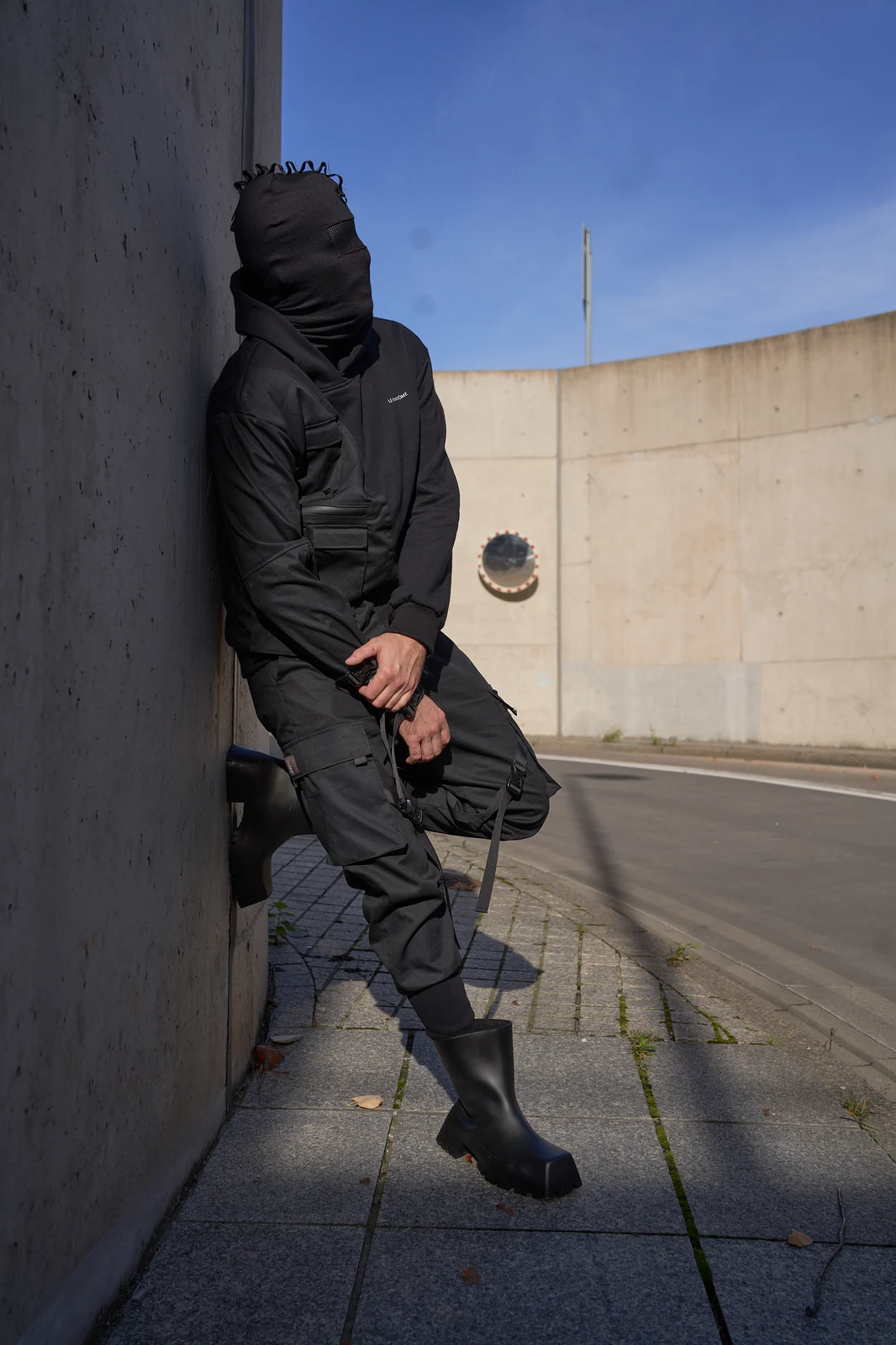
With cargo pants with straps, look at the whole line from waist to footwear. Arrange the straps as the design intends, then notice where they end. They can repeat the angle of a pocket or add a vertical line down a broader leg.
Try familiar shoes first. Then compare another pair you already own and look at what happens to the hem. A heavier sole may change the visual balance; a smaller shoe leaves more attention on the trouser volume.
For everyday use, test the pocket access with your normal bag and outer layer. The outfit still has to work while you sit down, reach for something or walk to the next place.
Direction two: a close base with an open outer shape
A close-fitting base can make the outline of an open jacket easier to read. The space between the two pieces becomes part of the construction: a narrow central opening, a wide shoulder frame or an uneven lower edge.
Cut-out bodysuits add another choice about where the surface opens. Try the body with the actual waistband and jacket before deciding which openings you want visible. A plain lower piece can keep that upper arrangement clear.
You can change the amount of exposure with a compatible underlayer or a different base. Check the complete combination in motion, including any visible edges beneath mesh. The daily version can keep the same arrangement of lines with a different level of coverage.
Direction three: let the outer layer do the work
A distinctive jacket can sit over a familiar T-shirt and trousers. Start there if you want the strongest change in one removable piece. Compare it open and closed where the design permits; the front may produce two quite different outlines.
Look at a techwear jacket through the shape of its collar, the placement of panels and the way the sleeves meet the body. Check whether your usual bag covers the feature that attracted you.
Choose any weather protection from the actual garment specification. A futuristic appearance does not establish a material's performance. For this outfit, the visual starting point and the practical requirement are two decisions to make together.
Repeat a detail at a smaller scale
Once the main shape works, look for one element worth repeating. A fastening at the waist may relate to a smaller closure at the wrist. A diagonal pocket edge can meet an angled jacket front. The repeated element does not need to be identical.
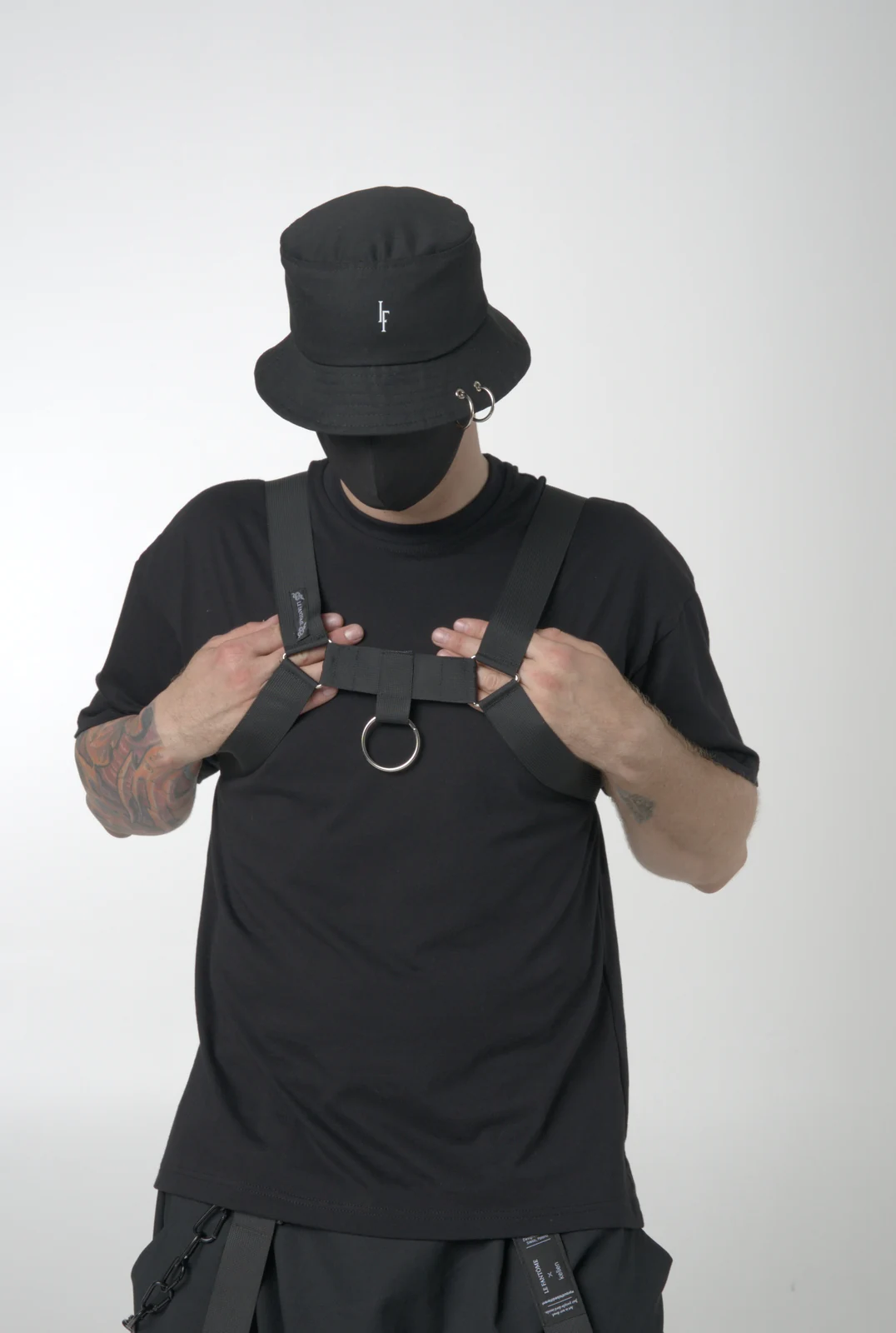
Try the outfit without additional hardware before adding it. If the garments already carry several buckles or straps, another accessory may simply cover their arrangement. Add the piece when it makes a line clearer or gives you something useful to carry.
Let surfaces create depth
An all-black outfit can still contain visible contrast. A smooth panel beside a more textured one, a sheer section over a solid base or a loose layer above a close one can separate the pieces.
Check those contrasts in the light where you will wear them. A bright campaign image makes some surfaces more prominent than they are on an ordinary street. Keep the differences you can actually see and enjoy in person.
Keep the part that feels like yours
Wear the first combination through a normal part of your day. Notice whether you keep adjusting a hem, whether a strap catches or whether a bag pulls the outer layer away from its intended position. Refine that relationship before adding more.
A useful futuristic outfit can grow from one changed line. You decide whether the next version becomes quieter, wider, more open or more detailed.
Explore techwear for related shapes. For more specific starting points, read the guides to building a first techwear outfit, styling a cut-out bodysuit and black cargo proportions.