
How to Style a Cut-Out Bodysuit
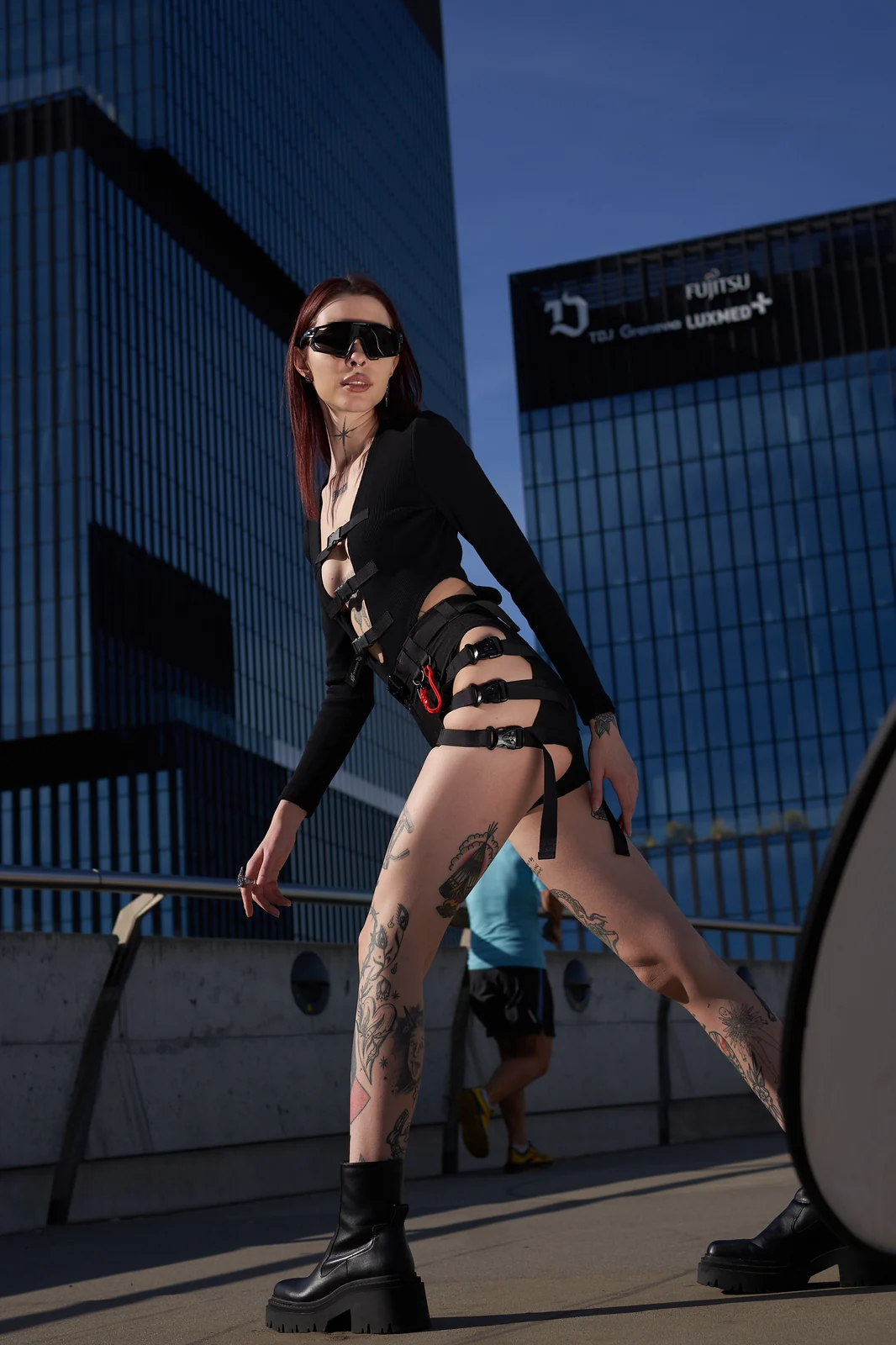
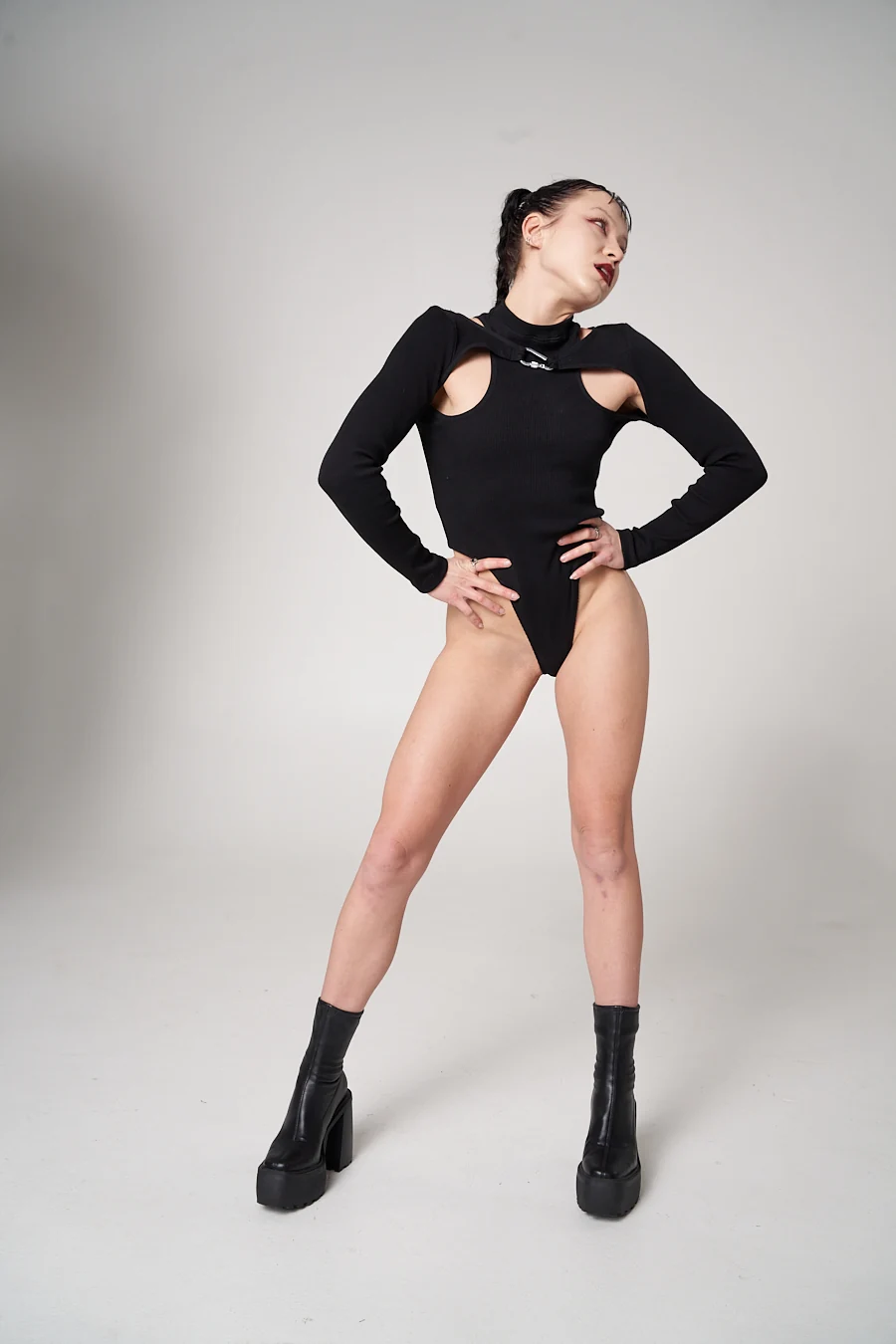
A cut-out changes how one piece meets the next. Choose the waistline, lower silhouette and outer layer around the openings you want to keep visible.
A cut-out creates an edge where you might expect another panel. Put a waistband across it, add a sheer layer over it or leave it open, and the whole outfit changes.
Style a cut-out bodysuit by choosing which lines you want to keep visible, then fit the trousers, skirt and outer layer around them. Check the complete combination in motion. The position of an opening on your body is more useful than its position in a flat product photograph.
Read the openings before choosing the layers
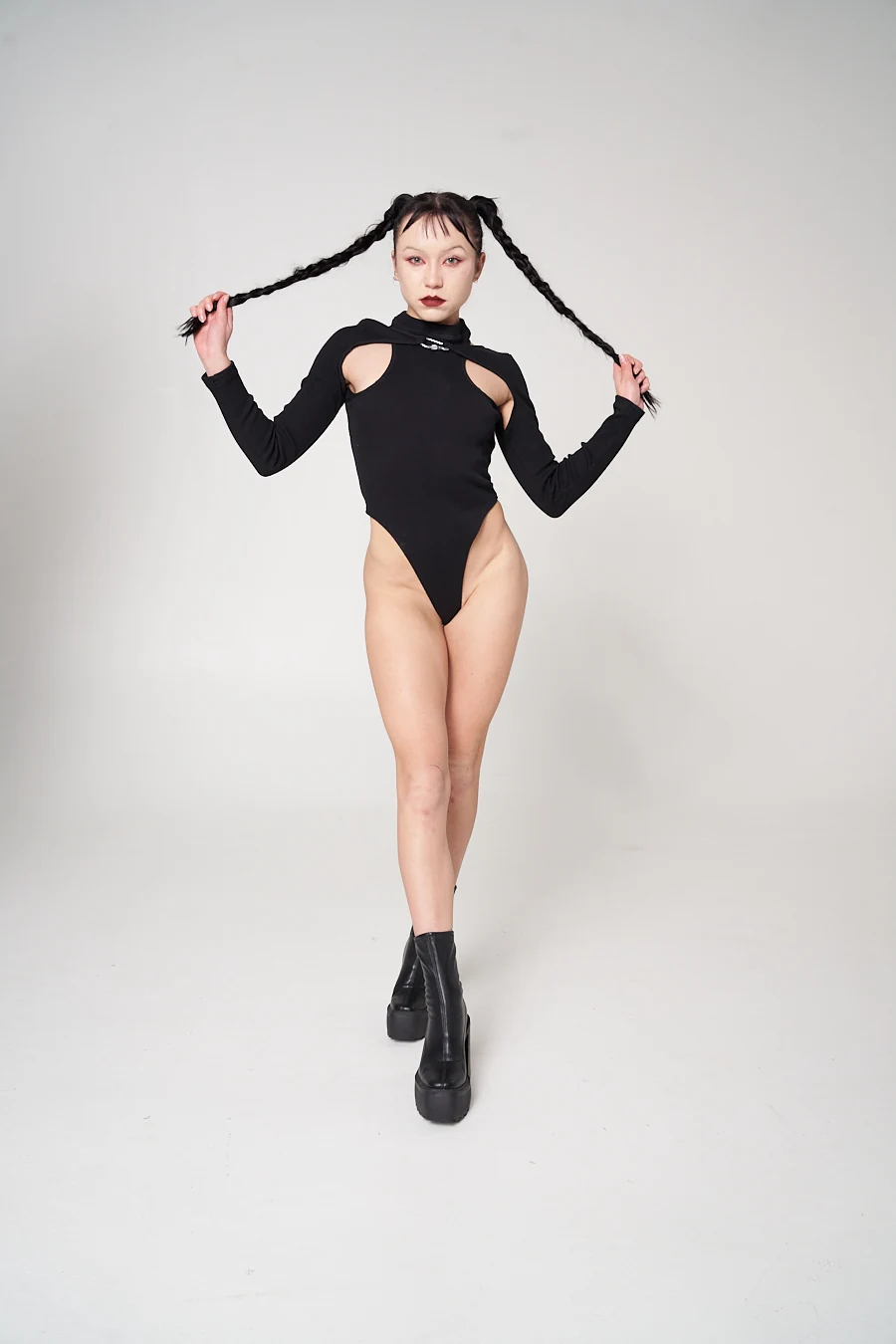
Look at the neckline, shoulders, sides and waist as separate areas. An opening high on the body can remain visible above a higher waistband. An opening lower down may meet that waistband or disappear beneath it.
Try a cut-out bodysuit with the actual lower piece you intend to wear. Pulling a waistband higher to imitate a product image may change the fit of both pieces. Choose where each one sits comfortably first, then judge the resulting line.
Mesh creates a different kind of open area from a cut-out. It can show the colour and shape of an underlayer while keeping a fabric surface across the body. If you are comparing styles, look at the close-up photographs as well as the full silhouette.
Check torso fit, not just the waist
A bodysuit continues between the upper and lower body. Its torso length therefore matters alongside chest and waist measurements. Follow the product's size guide and measuring method. If the listed information leaves an important fit question unanswered, clarify it before choosing the size.
With the piece on, raise your arms, sit, bend and reach forward. Notice pulling at the shoulders, neck or lower edge, and whether the openings move to a position you like. Try any adjustable or detachable element only in the ways described for that particular garment.
If the design has a fastening, check its position and ease of use. Do that with the complete outfit on. A comfortable bodysuit can become less convenient when several other fastenings sit directly over it.
With cargo pants: decide where the waist meets the body
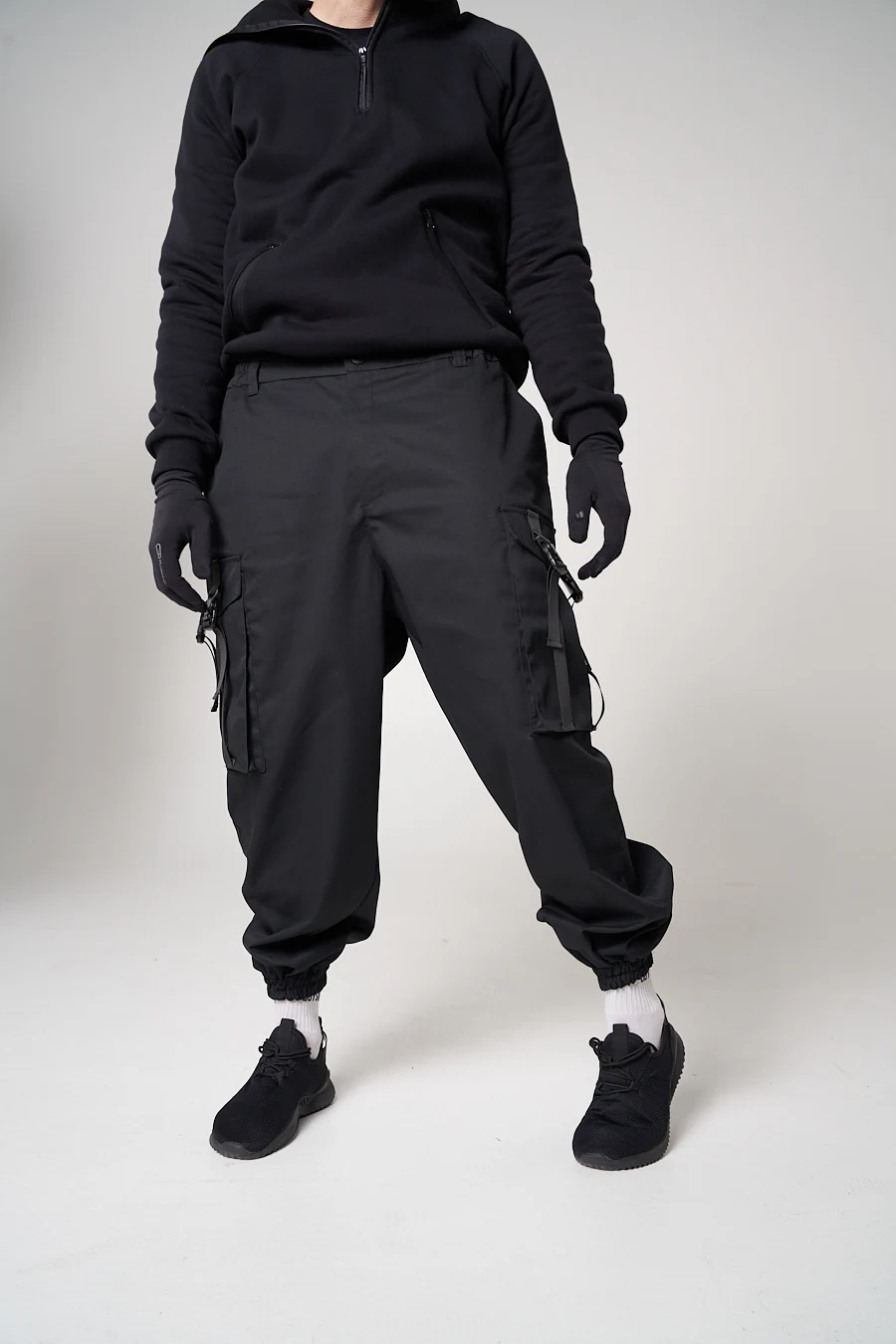
Loose cargo pants can make a clear lower volume beneath a close-fitting body. Start with a waist position that fits. Look at whether it crosses an opening, covers a ring or leaves a section of the bodysuit visible above it.
Then choose the width through the leg. A wide cut puts more visual weight below the waist; a straighter leg gives a more continuous outline. Check the side view, where the pocket volume and any loose straps become easier to read.
Try a plain pocket arrangement first if the bodysuit has several strong lines. If you want details above and below, connect them through one repeated element—a narrow strap, a buckle shape or an angle—while leaving some quieter surface between them.
With a skirt or shorts: compare the two hems
A rave skirt can frame the lower body while the bodysuit keeps the upper outline close. Try the skirt's waistband at its intended position and look at the whole length. For an asymmetric shape, check how the opening or longer panel moves as you walk.
With shorts, the bodysuit's leg line may sit beneath or above the shorts' opening, depending on both cuts. Decide which coverage you want and test it while sitting and stepping. Add the exact underwear or underlayer you plan to wear, so its edges become part of the decision.
Choose a lower piece you can move in without repeatedly readjusting the bodysuit. The combination should let you focus on the evening once it is on.
Frame the bodysuit with an outer layer
An open jacket can leave the central panel visible while changing the shoulder line. A shorter layer exposes more of the waist; a long layer can frame the full torso and upper leg.
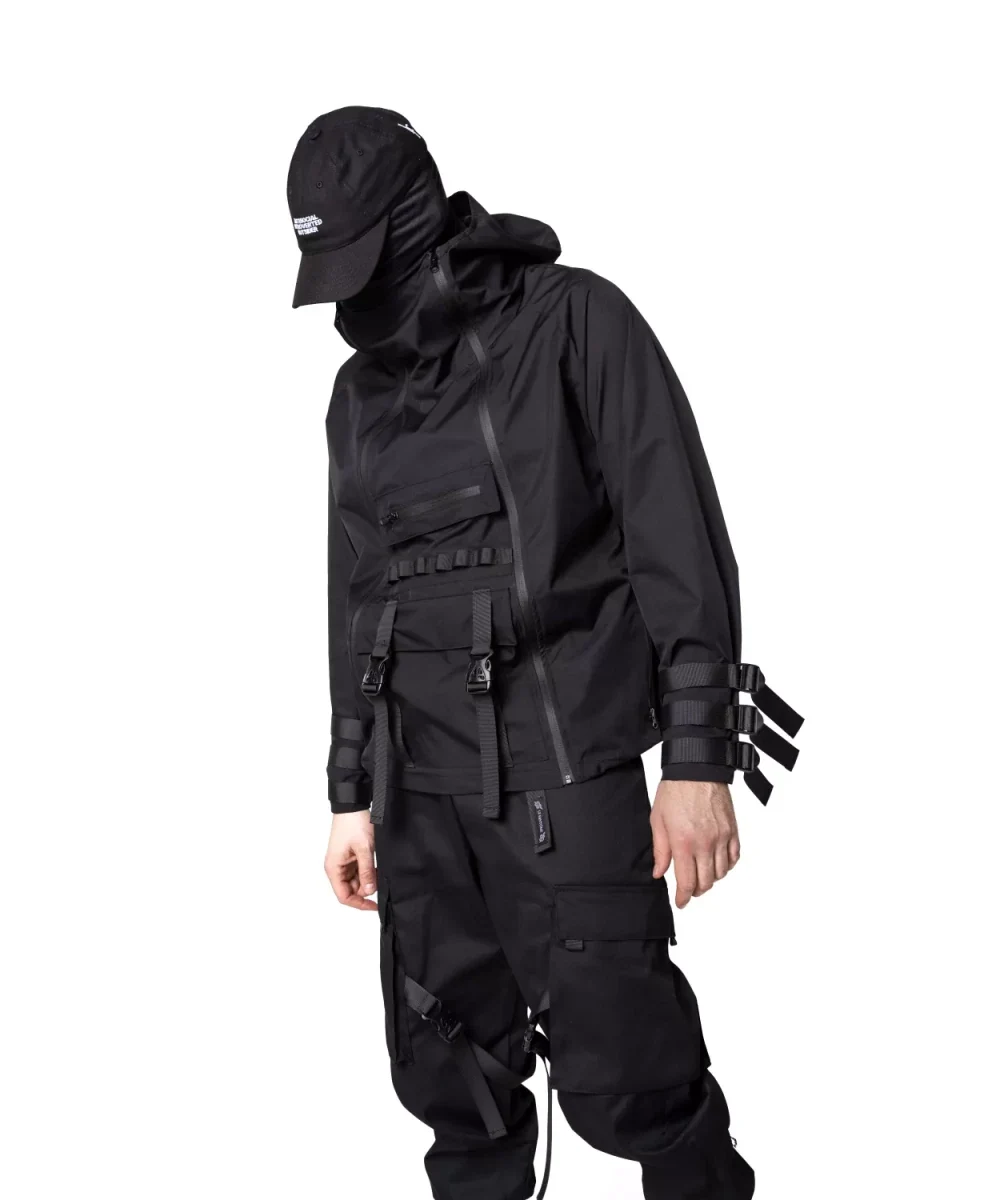
Compare rave jackets with the bodysuit underneath. A high collar may meet another high neckline, and a wide sleeve may add volume around an already strong shoulder. Try the jacket open and closed where the design allows. You may like two different versions of the same outfit.
Let the surface change the mood
For a more restrained daytime outfit, try a simple trouser shape and a plain open layer. For a stronger evening combination, bring in mesh, pocket volume or one substantial piece of hardware. The bodysuit can remain the same while the pieces around it change.
All black keeps attention on those differences in surface and coverage. A coloured underlayer adds another line through a sheer section. Choose the amount of contrast deliberately, including what remains visible through mesh.
Make the final check a full-outfit check
- Use the actual underwear and lower layer, including any belt.
- Check the position of openings while sitting, reaching and walking.
- Notice hardware or thick seams beneath a waistband or jacket.
- Try every fastening you will need to reach.
- Look at the outfit with the outer layer on and off.
Explore the wider LF bodysuit selection if you want to compare coverage and neckline shapes. For complete combinations, continue with women's rave outfit ideas or the guide to styling black cargo pants.