
How to Style Black Cargo Pants: Proportion and Detail
Choose the leg shape, then work upwards. A guide to styling black cargo pants with close tops, loose layers and footwear that changes the outline.
Black cargo pants bring their own structure: pocket volume, seams across the leg, a cuff or a length of webbing. Before choosing a top, look at what the trousers already do.
Style black cargo pants by deciding on the leg shape, the position of the waist and where the top will end. Add the shoes next. Once those four decisions work together, it is easier to choose the layer or detail that completes the outfit.
Start at the hem
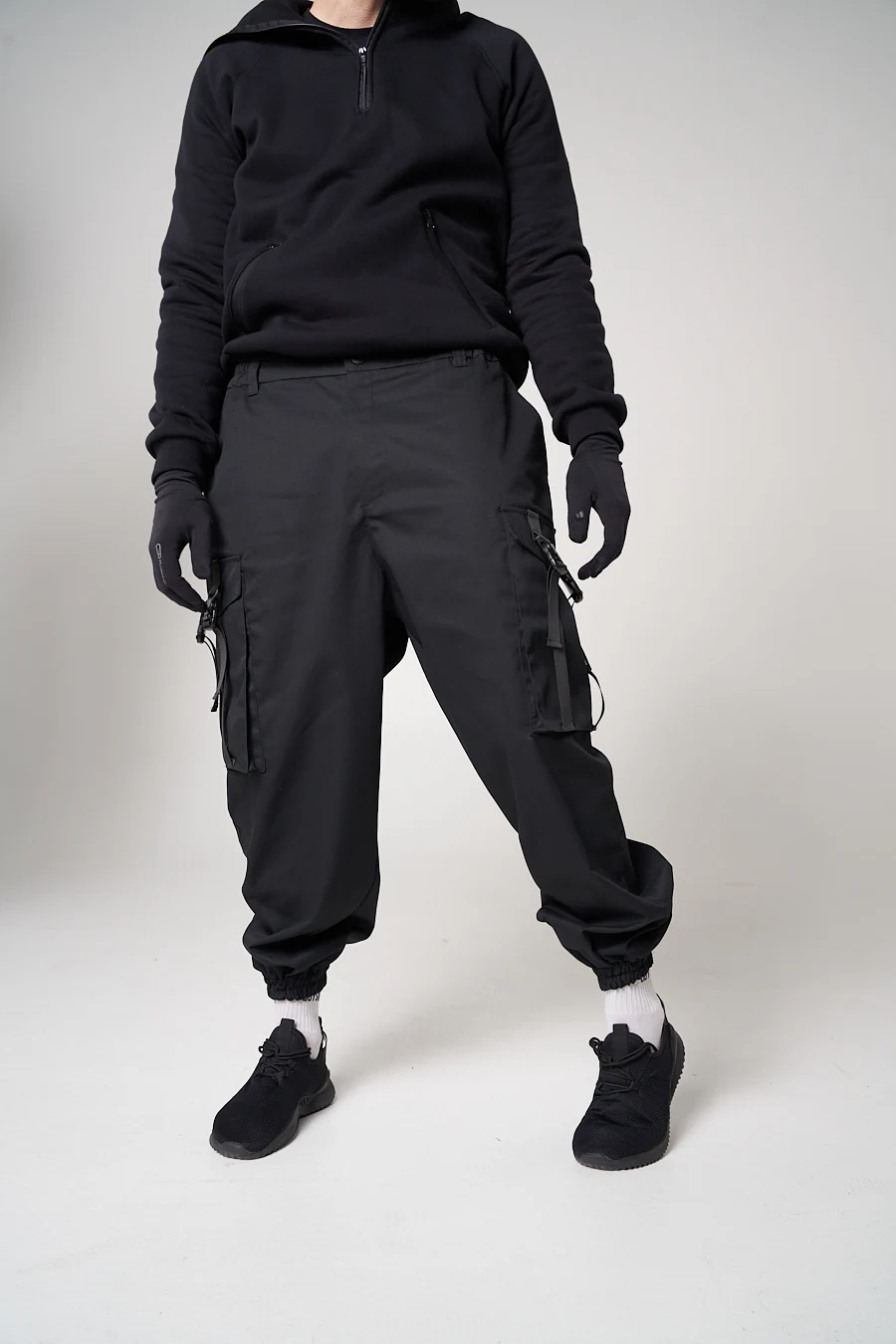
A straight open hem continues the line down to the shoe. A gathered cuff brings that width back towards the ankle. A cropped leg leaves a visible gap above the footwear. These are different shapes, even when the colour and pocket layout are similar.
Try the trousers with the actual shoes. Look at how the fabric rests over the upper, whether it bunches where you want it and whether the back hem clears the floor. Walk a few steps, turn and check again. A hem that looks deliberate while still can move out of place.
Browse black cargo pants with that lower outline in mind. If you are comparing cuts online, use full-length images as well as the pocket close-ups.
Give a wide leg a clear top edge
With baggy cargo pants, decide whether the waistband will remain visible. A close or shorter top can make a clear division between upper and lower volume. A longer loose top lets the two shapes overlap.
Neither needs to be a rule. If you want volume throughout, use another edge to define the look: a shorter jacket over a longer base, an open front or a sleeve that ends above the wrist. Try the combination from the side as well as the front. That is where the overlap of the layers becomes easier to see.
Three black cargo outfit directions
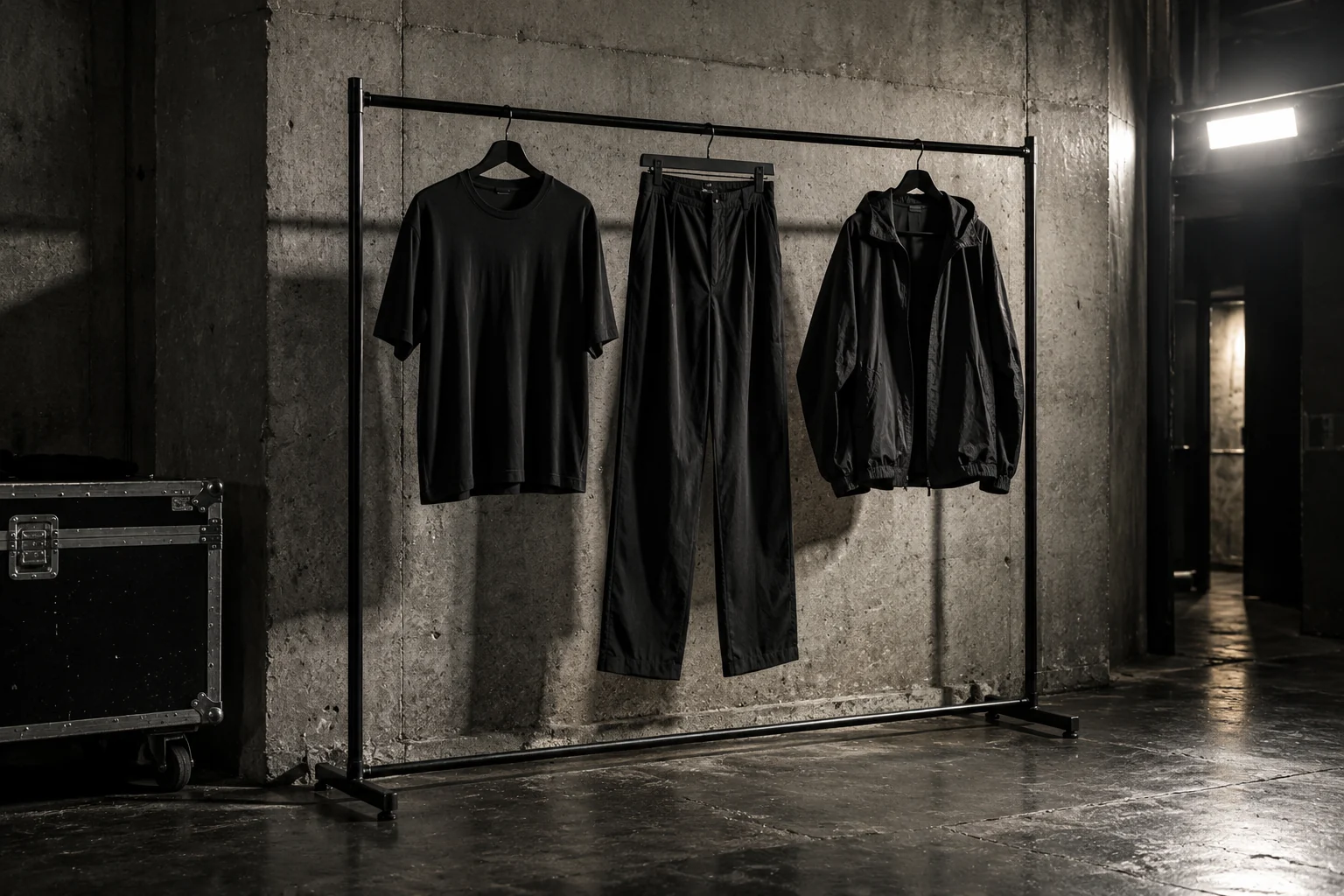
A plain T-shirt and a visible waistband
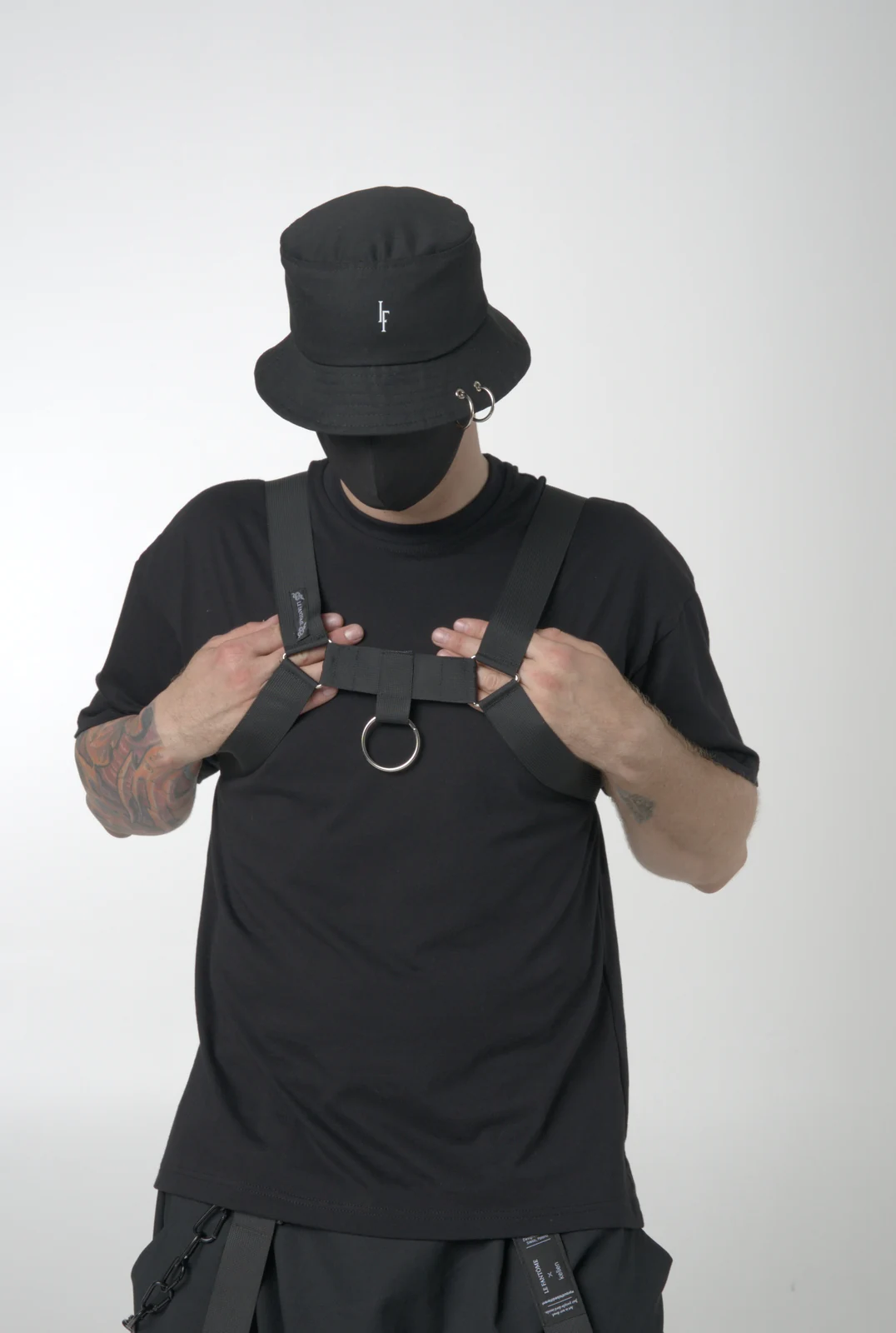
Let the pockets lead. Start with a plain T-shirt and a hem that ends above the main pocket arrangement. You can tuck a small part of the front if the fabric and waistband sit comfortably together, or choose a shorter top instead.
Finish with footwear that makes sense for the leg shape. A low shoe can leave the cuff prominent; a broader boot can make the bottom of the outfit feel more substantial. Keep the rest simple long enough to see which version you prefer.
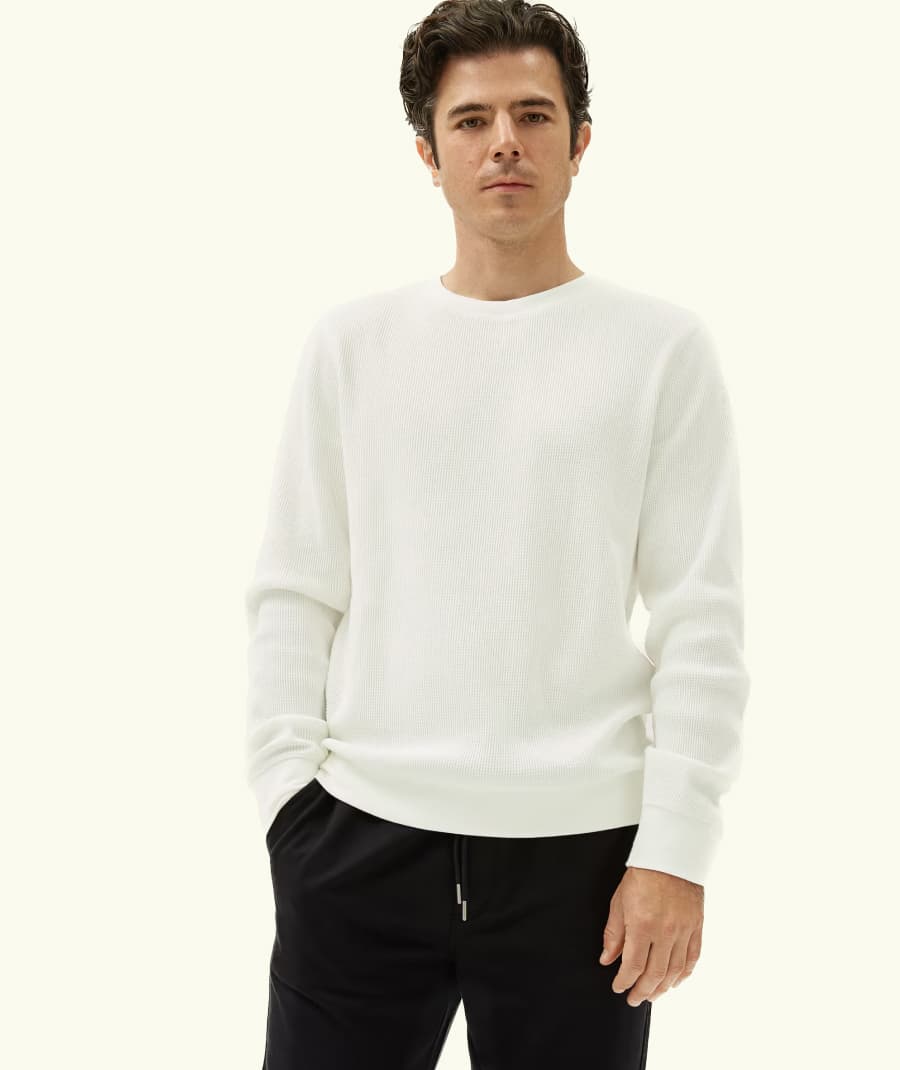
A fitted base and an open jacket
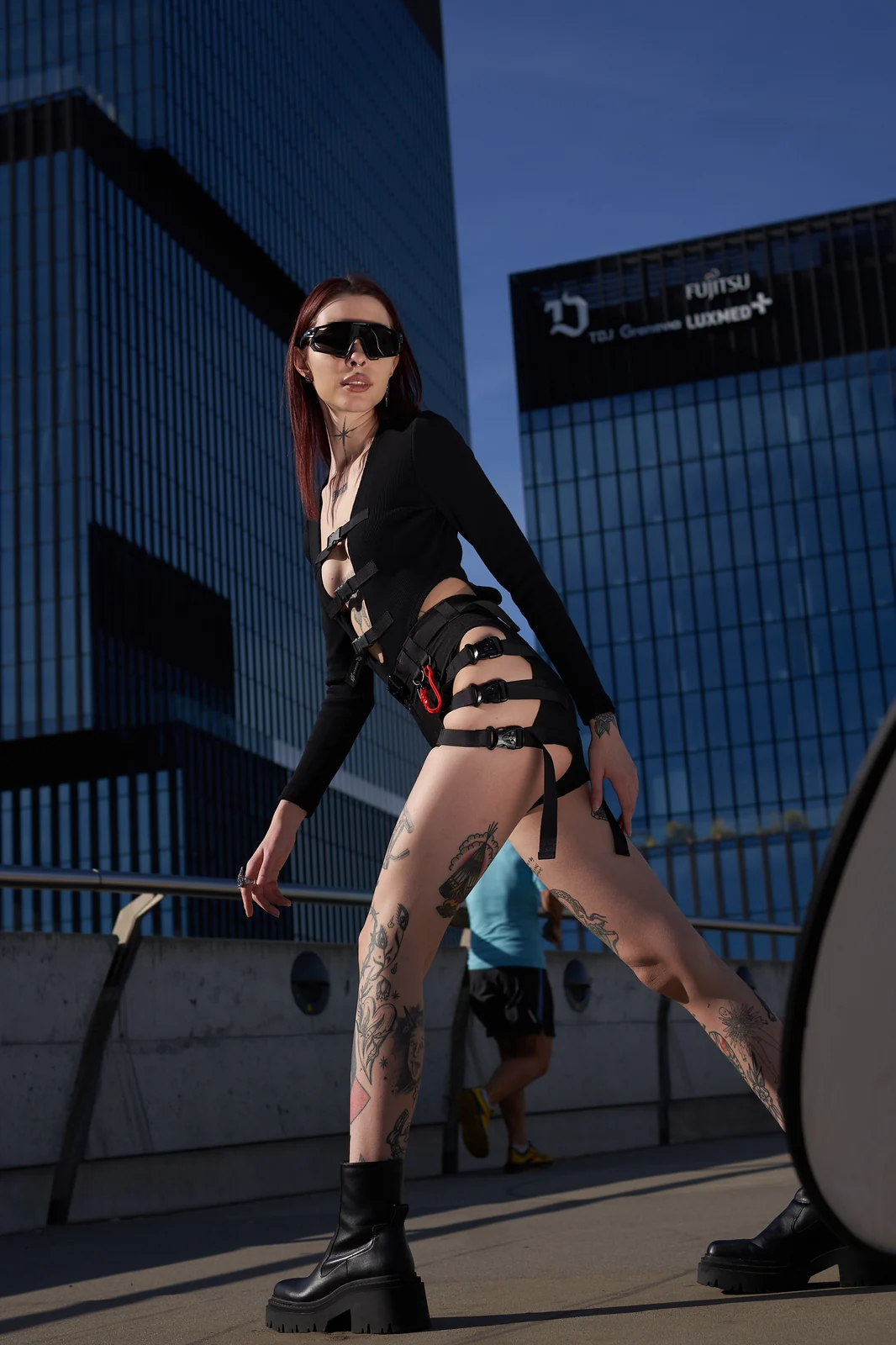
A fitted top or bodysuit can create a close central shape above loose cargo pants. An open jacket adds a second outline around it. Check the length of the jacket against the trouser pockets: covering part of a large pocket creates a different arrangement from leaving the whole pocket visible.
This is a useful way to introduce another texture without losing the dark palette. A sheer upper layer, an opaque base and a matte trouser leg can remain distinct through their surfaces. Use the waistband to decide where those textures meet.
A loose hoodie and a gathered cuff
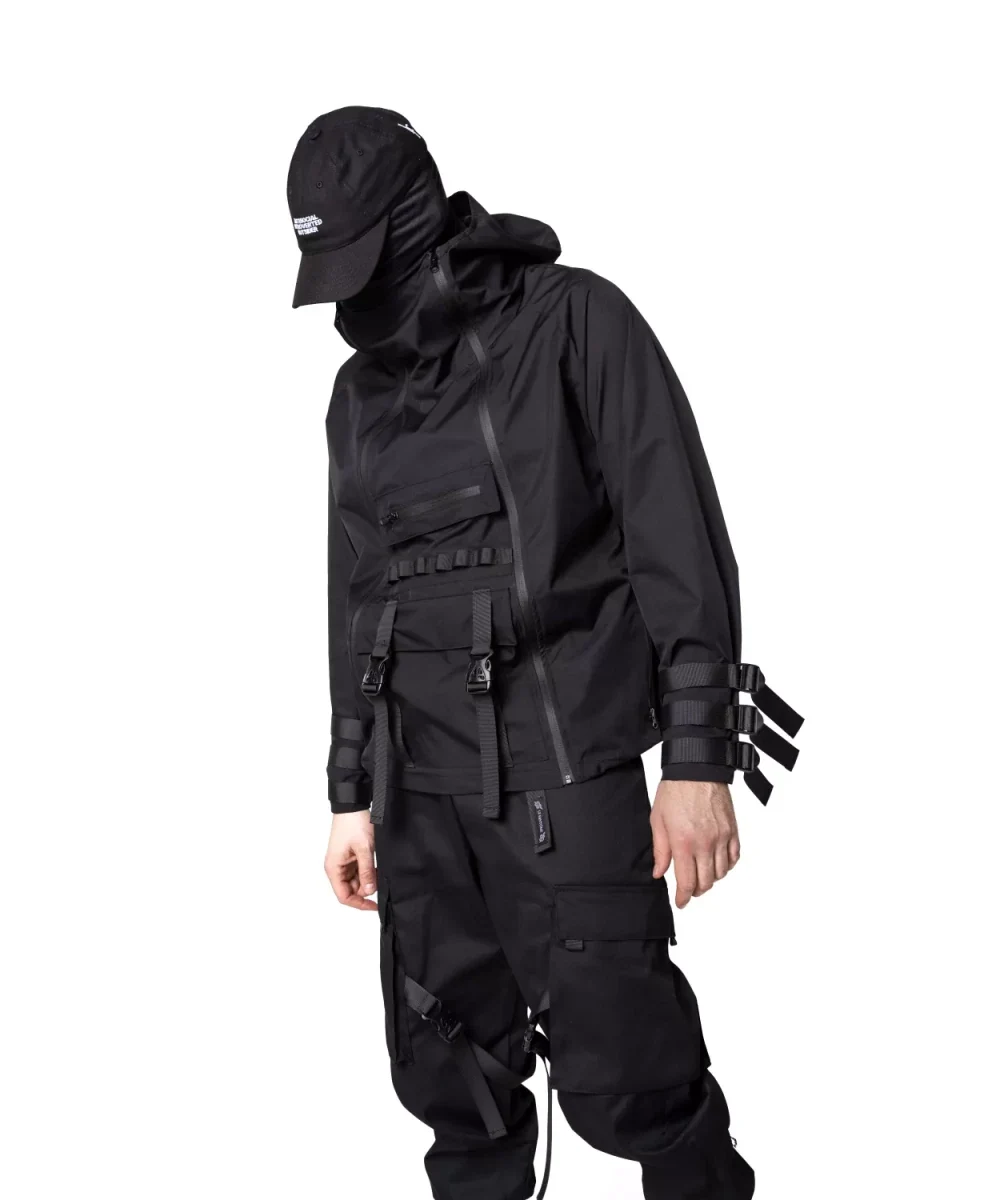
For volume above and below, look for a definite end to each shape. The shoulder and sleeve build the upper volume, the hoodie hem ends it, and a gathered trouser cuff sets the lower boundary.
Check the length of the hoodie with your arms down. If it hides every detail at the top of the trousers, decide whether that continuous shape is what you want. A shorter hoodie or a different trouser rise changes the balance without requiring more accessories.
Make the pockets part of the composition
Large side pockets add width where they sit. A flap, buckle or strap can introduce another line across the leg. Look at the garment empty first, then try it with your usual essentials inside.
The shape may change with the load. Put your phone in the pocket you expect to use, close it and sit down. Check that you can reach it without pulling the waistband down or catching an upper layer. More pockets are useful only if their position works for you.
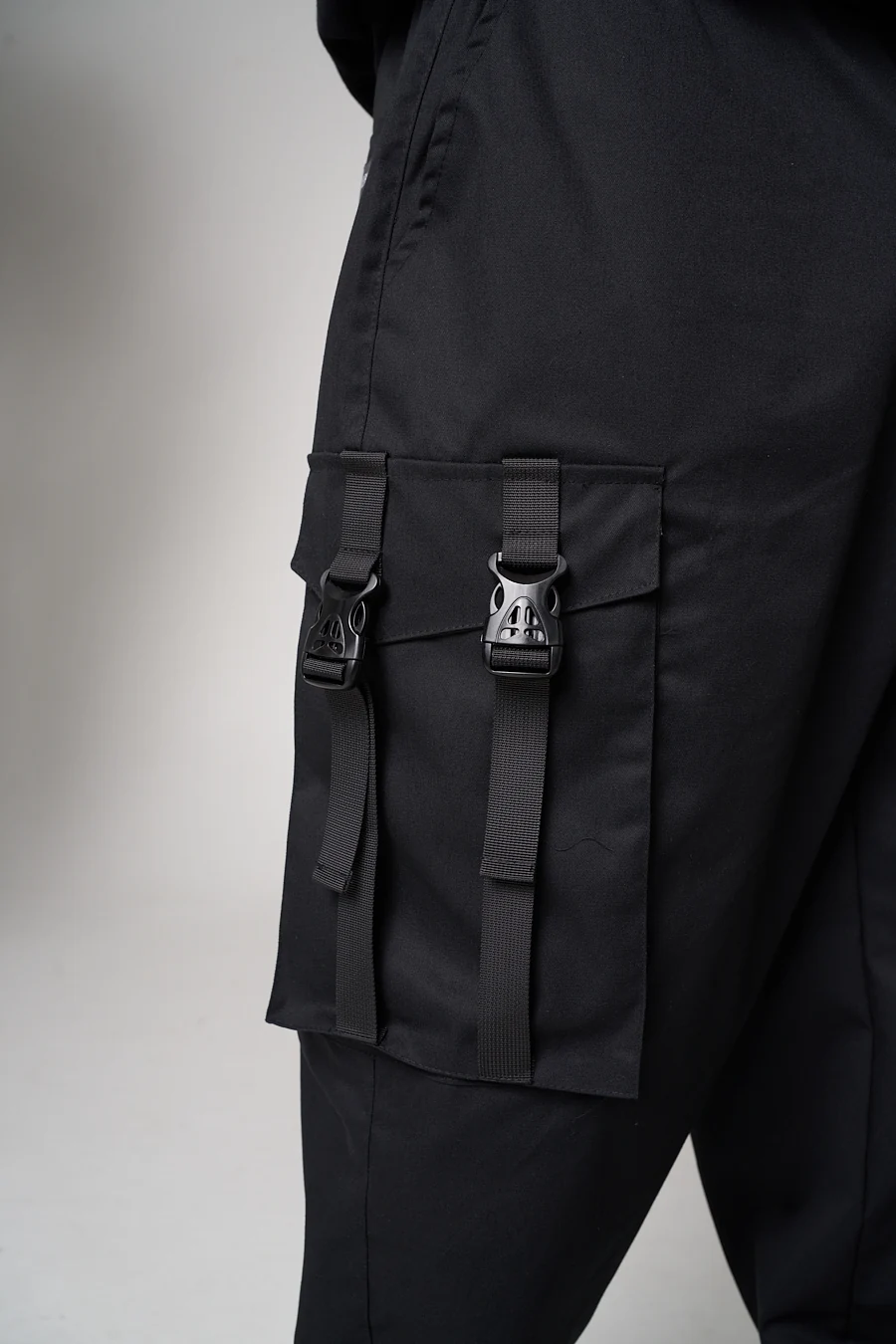
If you choose cargo pants with straps, check how each strap is intended to sit. Adjust it as designed and walk in the complete outfit. Keep anything loose clear of your feet and notice whether it catches against the other layers.
All black does not have to look flat
Different black fabrics can vary in tone and surface. View the pieces together in daylight as well as indoor light. A washed black and a deep black may give the outfit a useful difference; decide whether you want that contrast rather than assuming they will match.
You can also separate the shapes with a pale top, a coloured base under mesh or a visible sock. Begin with one area of contrast. Look at the whole outfit again before repeating it elsewhere.
Use the measurements to choose the cut
Compare the garment's stated measurements with a pair that already fits you well, following the measuring method in the product's size guide. Waist, rise, thigh and length all matter to the resulting silhouette. Choosing a larger size changes more than leg width, so check the whole fit rather than sizing up automatically.
Explore both women's cargo pants and men's cargo pants by their actual cut and measurements. Pick the construction that gives you the outline and movement you want.
Then return to the simplest test: put the complete outfit on, move in it and remove one detail if it distracts from the shape you chose. The trousers already give you plenty to work with.