
Men’s Rave Outfit Ideas: Shape, Pockets and Layers
Four approaches to a men's rave outfit, from a simple pocket T-shirt and loose leg to a hooded silhouette. Start with shape; give each detail a purpose.
A loose leg changes the stance. A shorter top reveals the waist. A hood brings the outline closer around the face. You can build a men's rave outfit through those choices before adding a single accessory.
Start with the piece you want to lead: cargo pants, shorts, a pocket-panel top or an outer layer. Let the remaining pieces give it room. Below are four directions to try, with the fit decisions that make each one work.
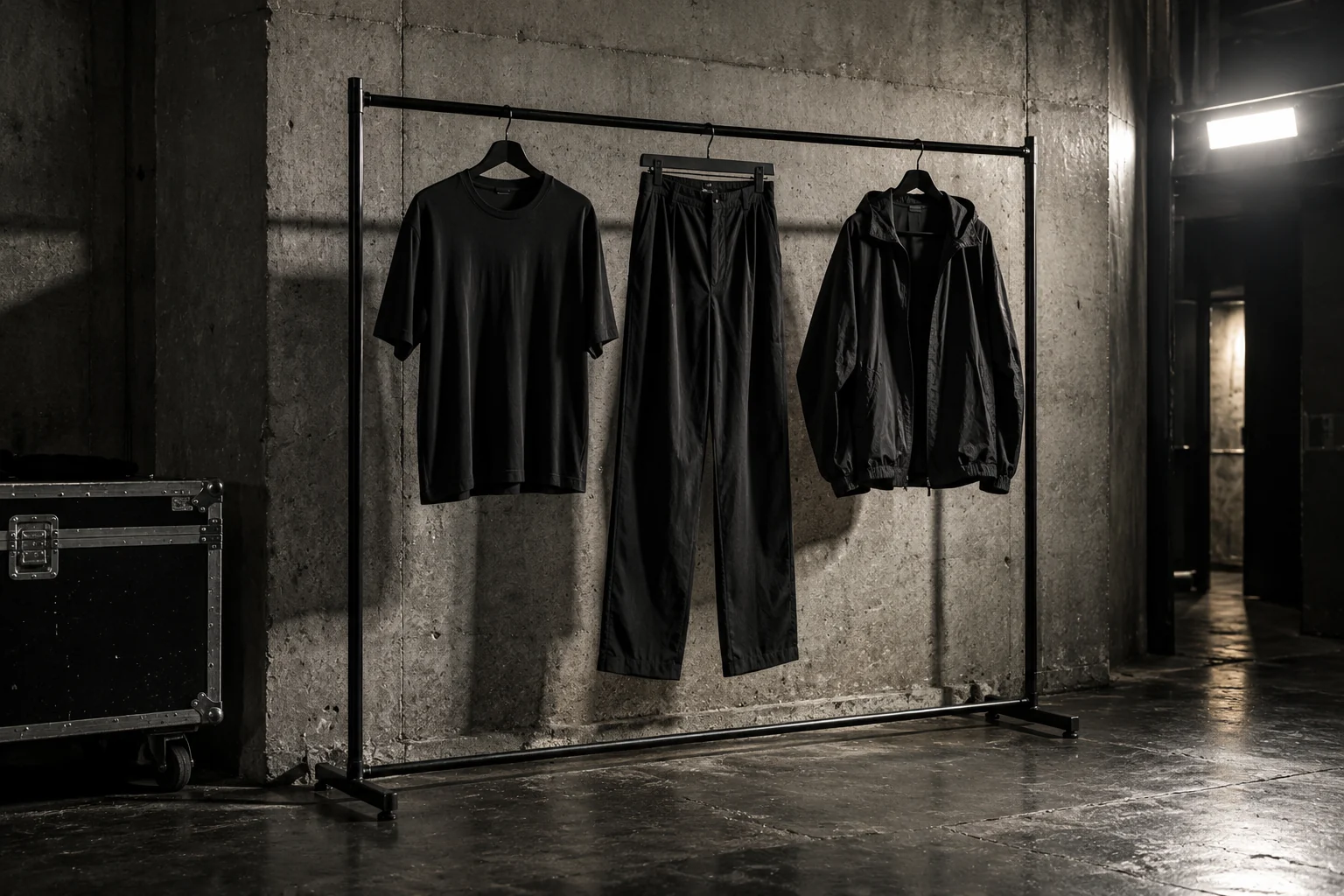
1. A pocket T-shirt and a loose leg
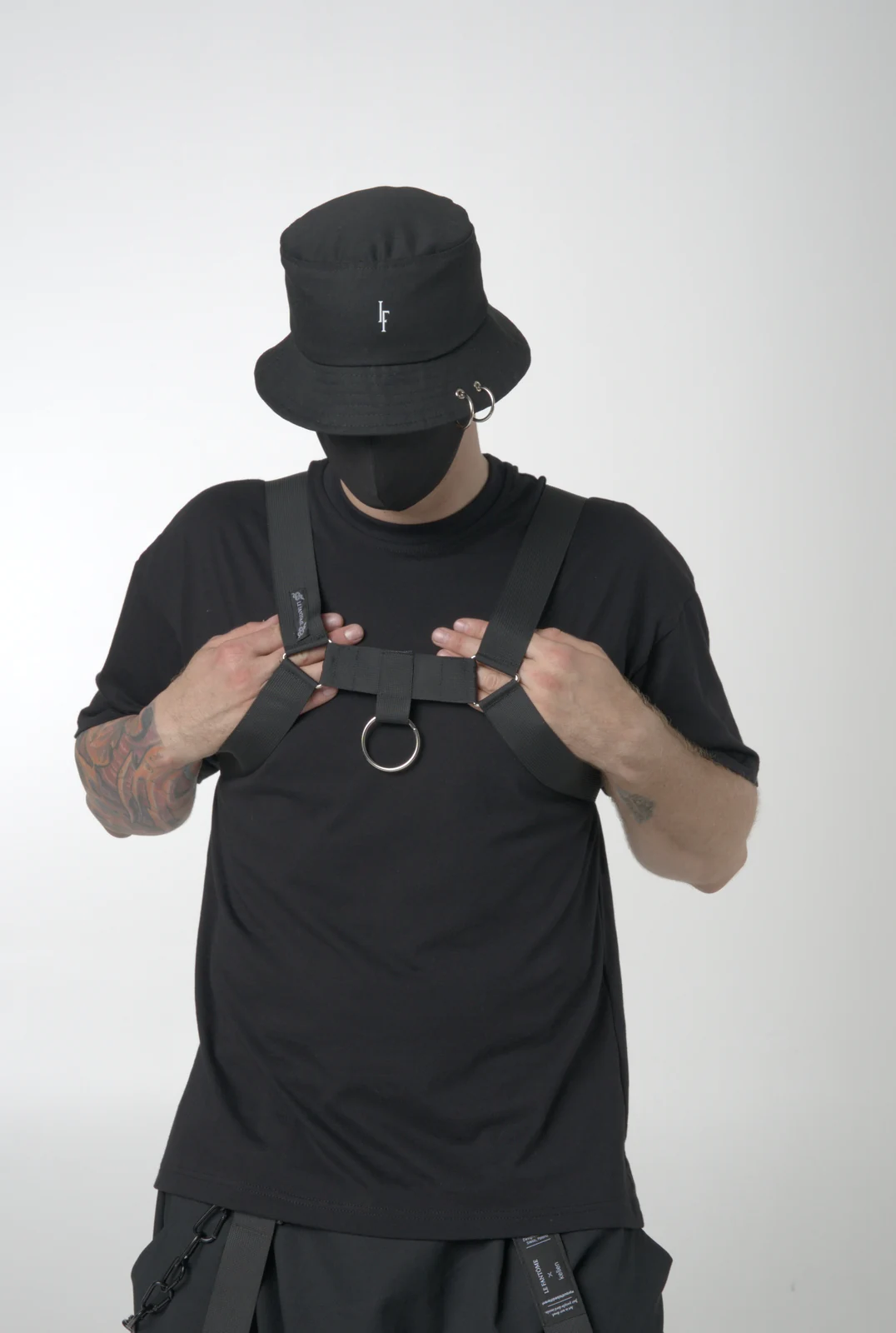
Keep the construction visible. A T-shirt with a pocket panel gives a plain dark outfit a point of focus; trousers with a relaxed thigh continue the volume below it. Choose the length of the top with the trousers on. A long T-shirt can hide the waistband and upper pocket arrangement, while a shorter one leaves that construction exposed.
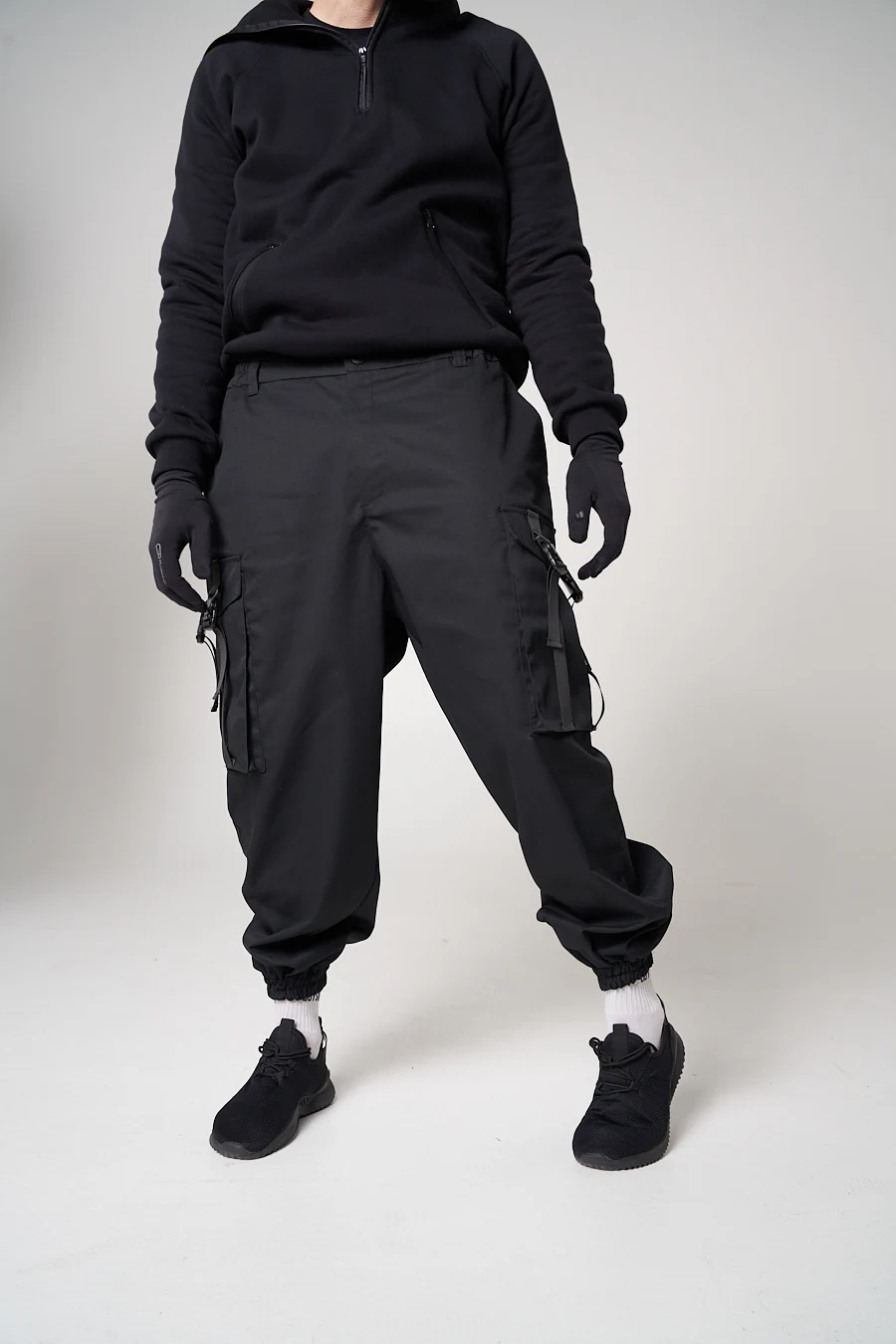
Try men's rave pants with the shoes you plan to wear. Set the hem so it clears the ground, then look at the outline from the side. The relationship between the knee, cuff and shoe decides whether the shape reads as straight, tapered or gathered.
With volume in both pieces, one clean area helps the eye. That could be a plain sleeve, an uninterrupted front panel or a simple shoe. You can use a pocketed top and detailed trousers together; give their details different places to sit.
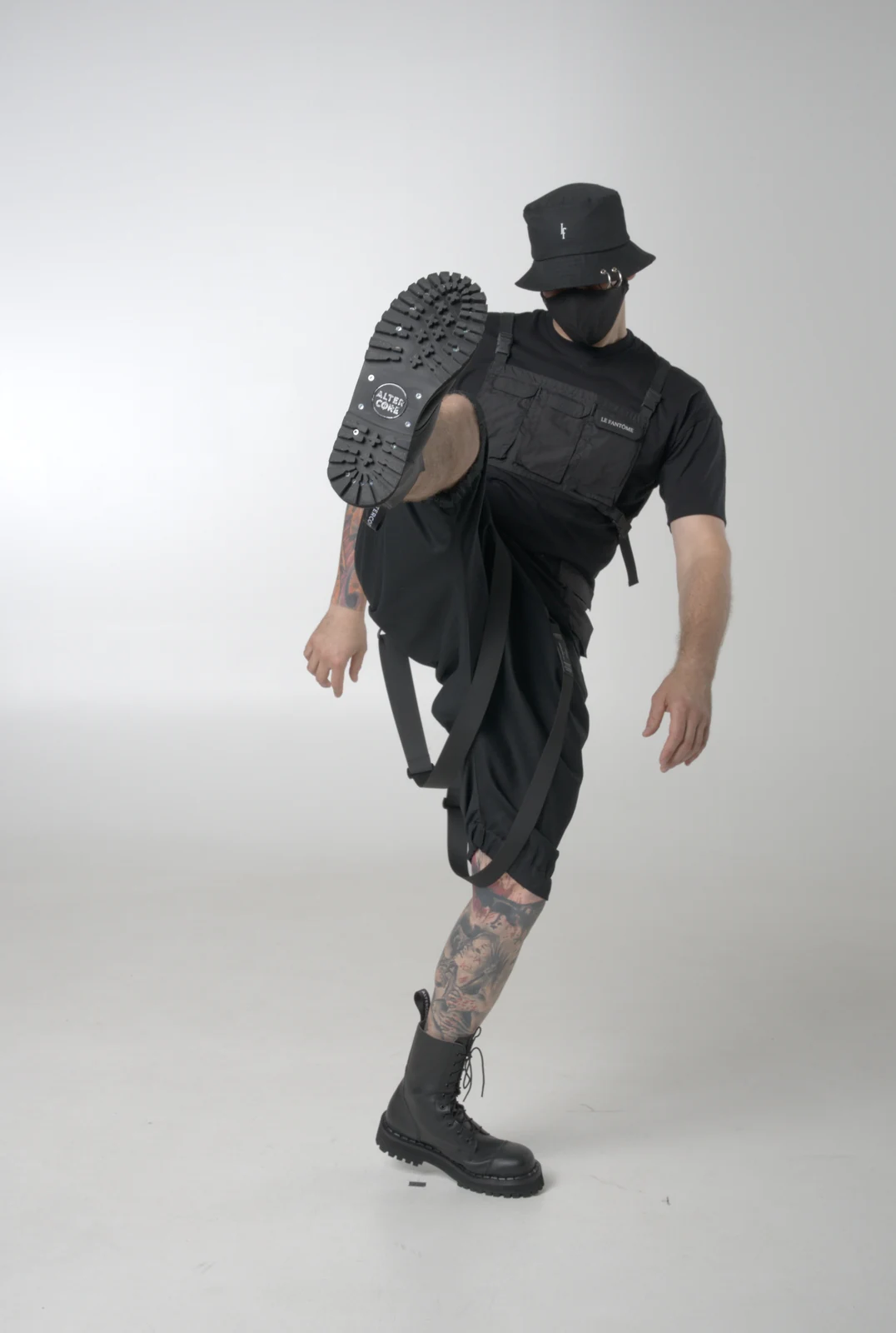
2. Cargo shorts with a boxy top
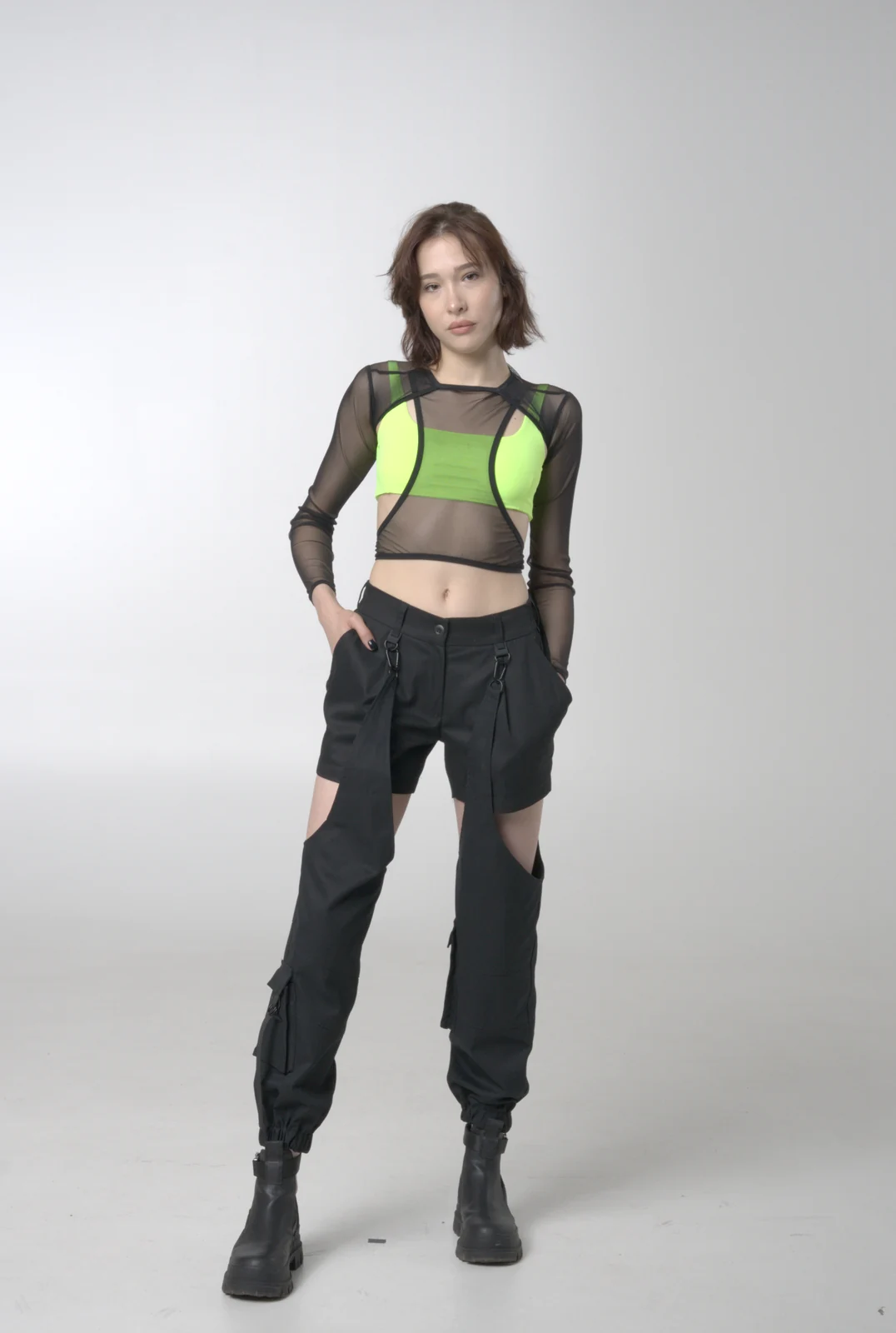
Shorts change the balance quickly. The leg ends higher, the socks and footwear become more visible, and an oversized top takes up more of the outfit. Try the top untucked first. Then lift its hem slightly in the mirror to see whether a shorter length would give you the proportion you want.
When choosing rave shorts, look at the rise and the position of the pockets. A lower crotch and a straight-cut leg create a different silhouette from a close, shorter cut. Both can work; check the stride and waistband on your own body.
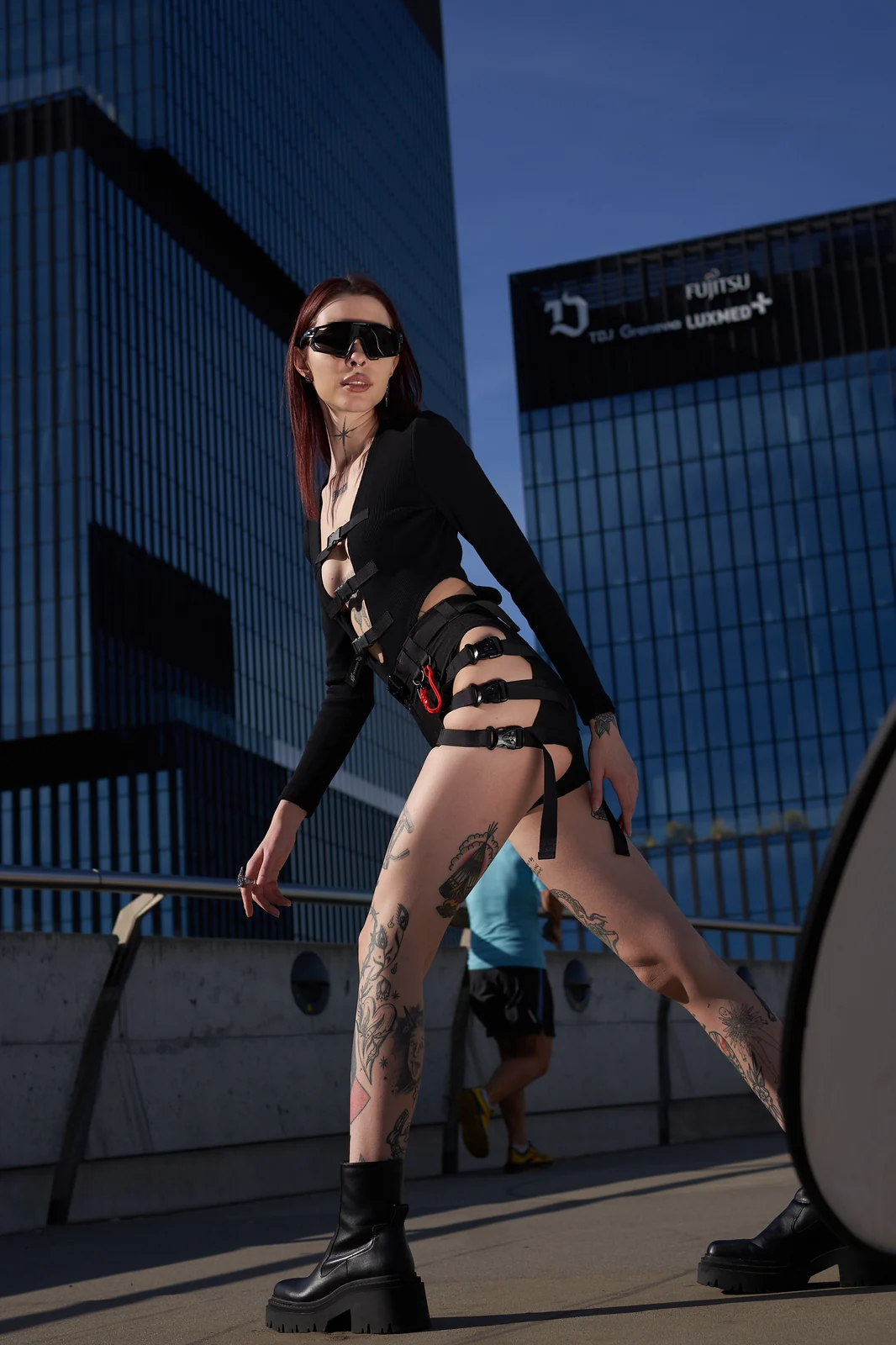
Use the details already built into the garment. If the shorts have prominent straps and buckles, start with a quieter top. If the shorts are plain, a panelled top or an asymmetric layer can carry more of the visual weight. Check any loose webbing while walking and dancing.
3. A hooded layer with defined trousers
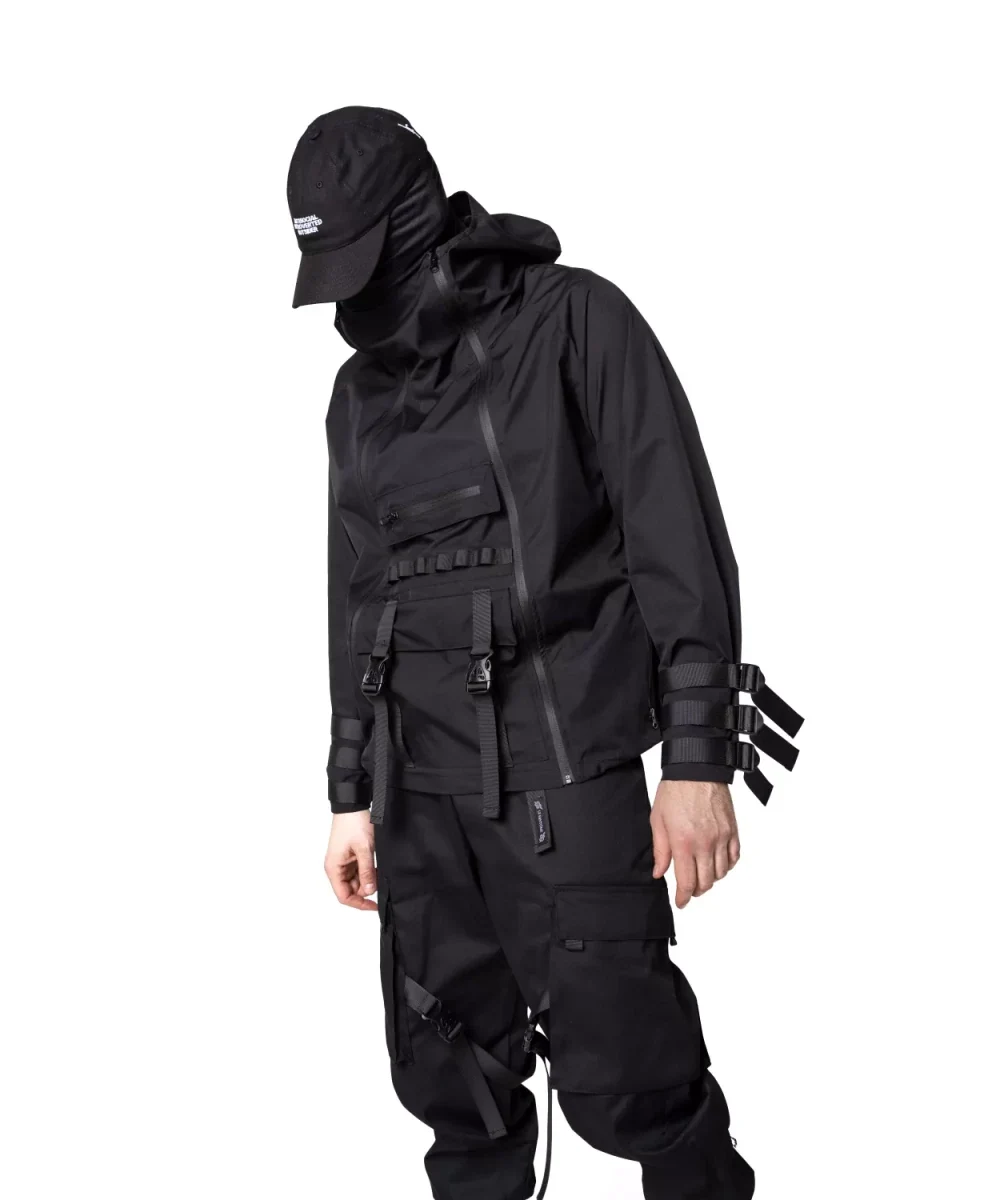
A hood changes the upper silhouette even when worn down. Together with a large sleeve or asymmetric pocket, it can make the top half the main event. Choose trousers whose shape remains clear beneath it.
That does not require a skinny leg. A straight or gently tapered cut can give the hoodie a stable outline to sit above. With wide trousers, pay attention to where the hoodie ends and whether the two volumes merge into one continuous shape. Try the combination with the outer layer both open and closed, if its construction allows.
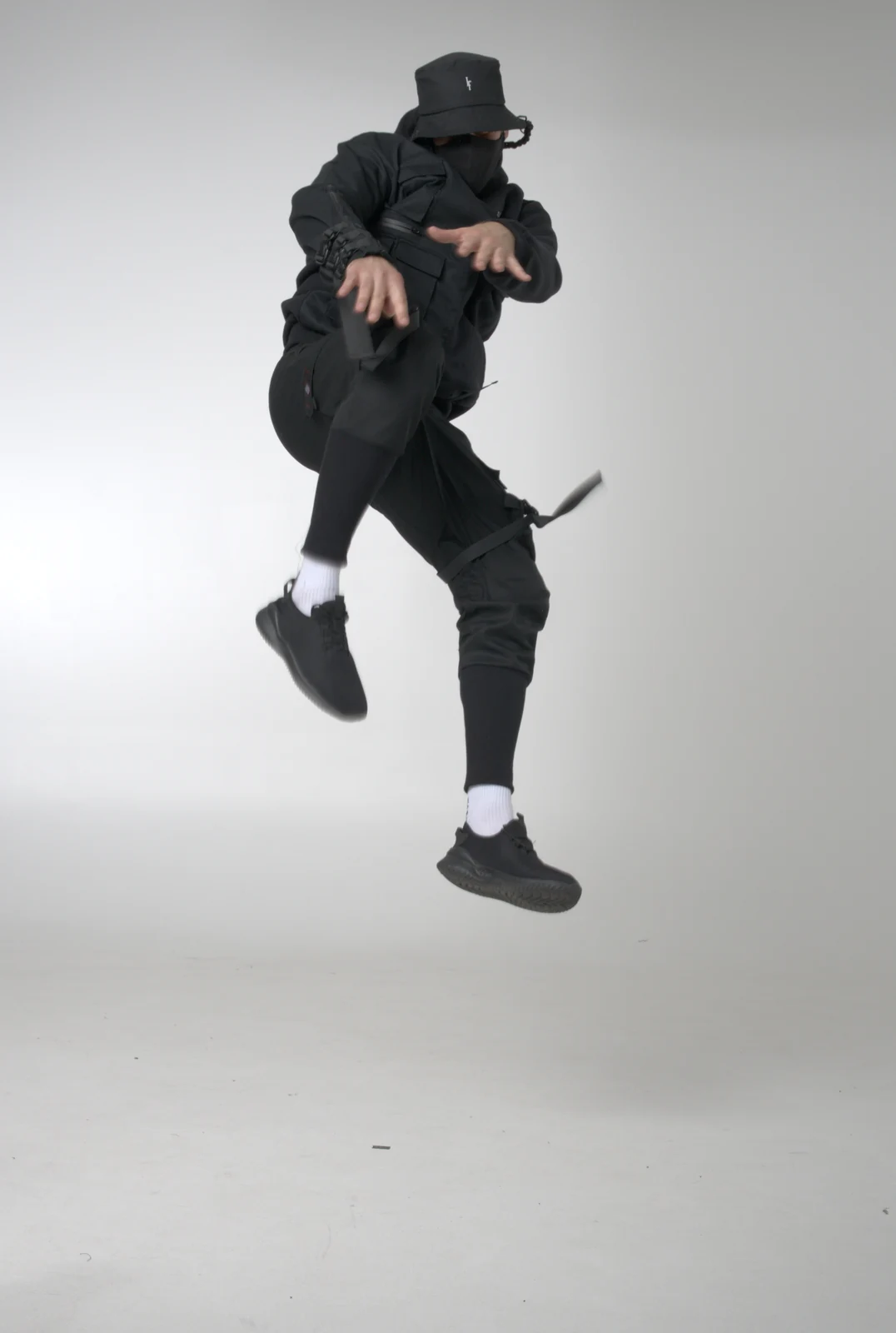
Explore men's rave hoodies by sleeve, length and fabric weight. A substantial garment may work well for the journey and be too much for a warm room. Plan where it goes when you remove it, rather than relying on the outfit to feel the same everywhere.
4. One light piece inside a dark outfit
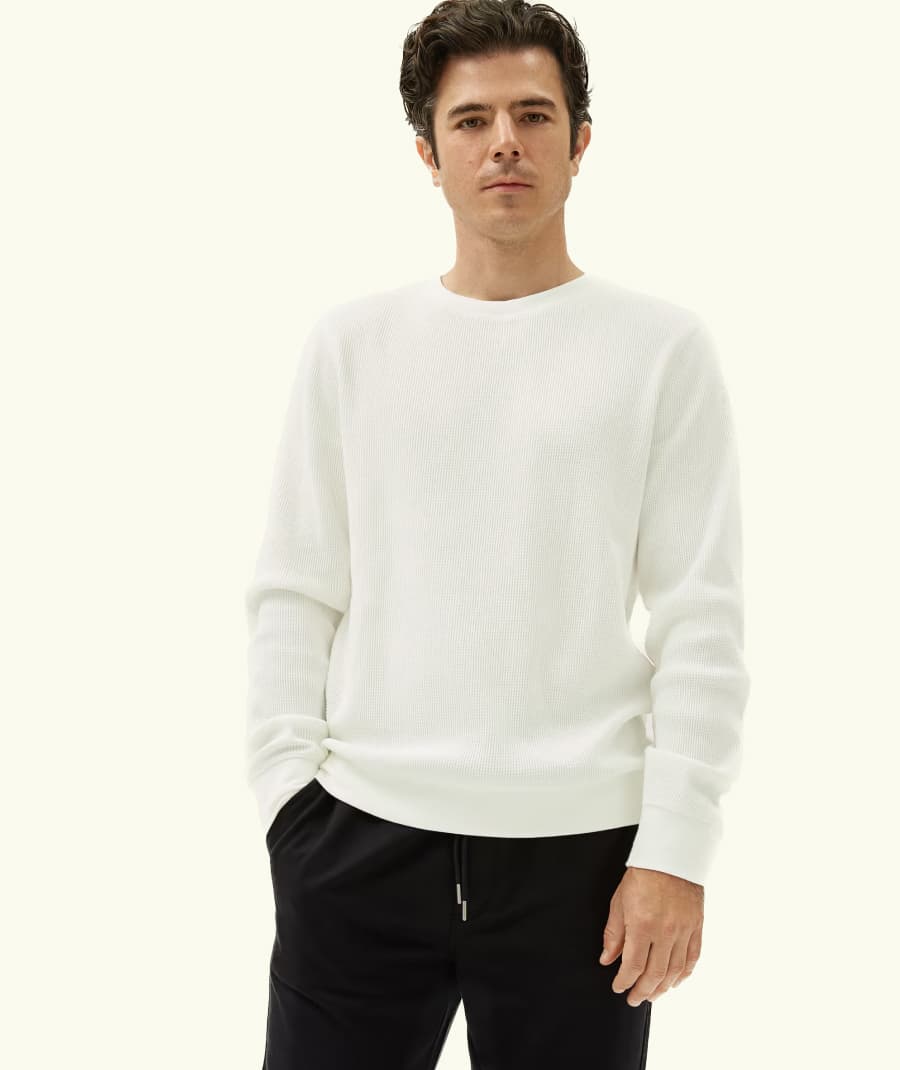
A white or pale T-shirt can separate a black jacket from black trousers. It makes the opening of the jacket visible and gives the eye a clear central panel. The same outfit will read differently with a longer light top, a close-fitting one or a shirt whose hem sits at the waistband.
Look at men's rave jackets as part of that frame. An open jacket shows the contrast; a closed one hides it and brings the outer construction forward. Try both versions. Build an outfit you like in each state, especially if you will spend time outside before entering the venue.
If you prefer all black, create the separation through texture instead: a matte top beneath a different surface, or a closer base beneath a loose layer.
Choose the cargo shape before counting the pockets
For men's cargo pants, the useful questions are quite specific. Where does the waistband sit? Can you bend your knees without the pockets pulling tight? Does the phone fit securely? Can you reach the closure with the top layer on?
Test pocket contents before committing to the outfit. Filling every pocket can distort the shape and add weight where you do not want it. Keep straps adjusted and check whether metal fittings touch or catch other pieces when you move.
Edit the complete outfit
Lay everything out, including the shoes and bag. Choose the leading piece and ask what each other item adds. A second strap can repeat a line; several unrelated straps can make the shape harder to read. You decide how much detail belongs in the outfit.
- Check the hem: it should sit where you want it with the actual shoes, including while stepping.
- Check the waist: pockets and a bag should not pull it out of position.
- Check the layers: sleeves and pockets need room beneath the outer piece.
- Check the venue: entry guidance can affect bags, face coverings and substantial metal accessories.
You do not need a complete new wardrobe to try these directions. Keep a familiar base, change one silhouette and spend some time moving in the result. Start with men's rave clothing from LF and choose the piece you want the rest to follow.