
Japanese-Inspired Streetwear: Shape and Layering
Broad sleeves, a generous leg and a clear line between layers. An LF styling approach to Japanese-inspired clothing, built through proportion rather than costume.
A sleeve can widen the shoulder without a heavy structure. A trouser leg can hold volume away from the body. A short outer layer can expose the longer line beneath it. These are useful places to begin.
For an LF approach to Japanese-inspired streetwear, choose one broad shape, give the layers distinct edges and keep the outfit usable in your own day. This is one interpretation through LF clothing. Japanese fashion contains many different directions; a wide sleeve or a dark palette does not define all of them.
Choose the shape before the accessories
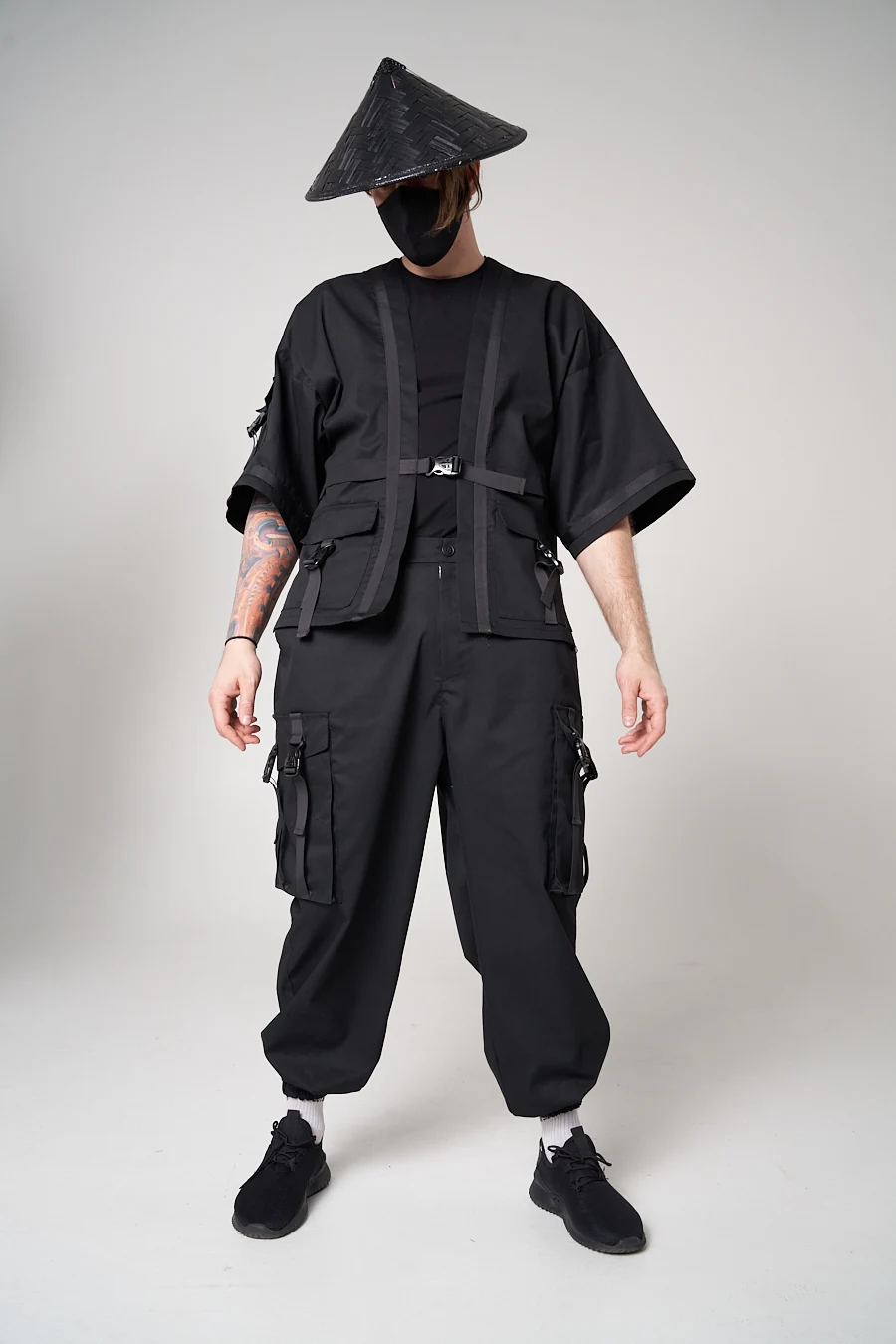
Begin with the outline of the clothes themselves. In the Japanese-inspired clothing selection, compare sleeve width, body length, trouser volume and the placement of closures. Those differences give you concrete styling choices.
Try one piece as the starting point. If it is a wide-sleeved layer, leave enough space around it to see the sleeve. If it is a generously cut trouser, check where the top ends above it. You can add more volume later, once the first relationship works.
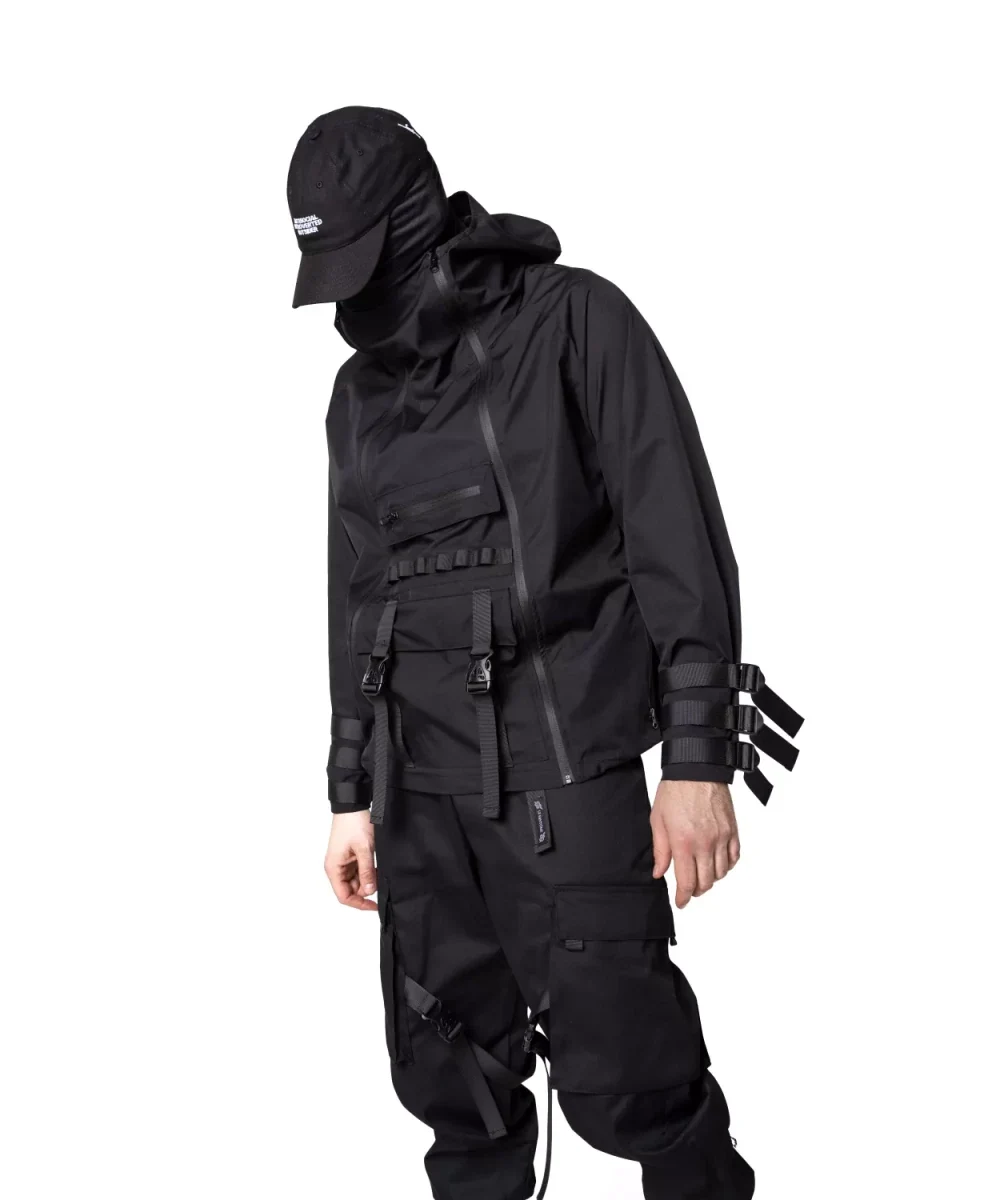
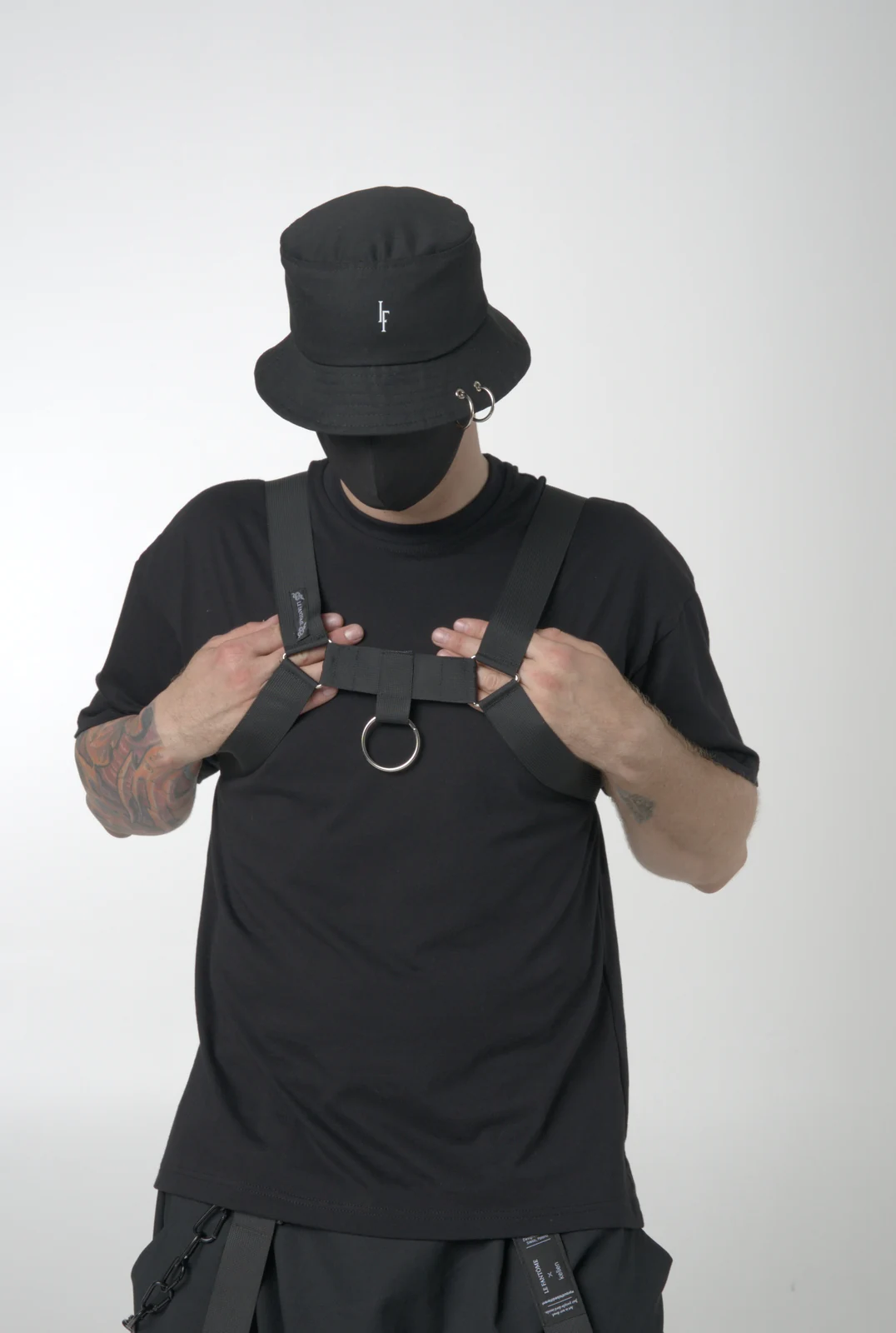
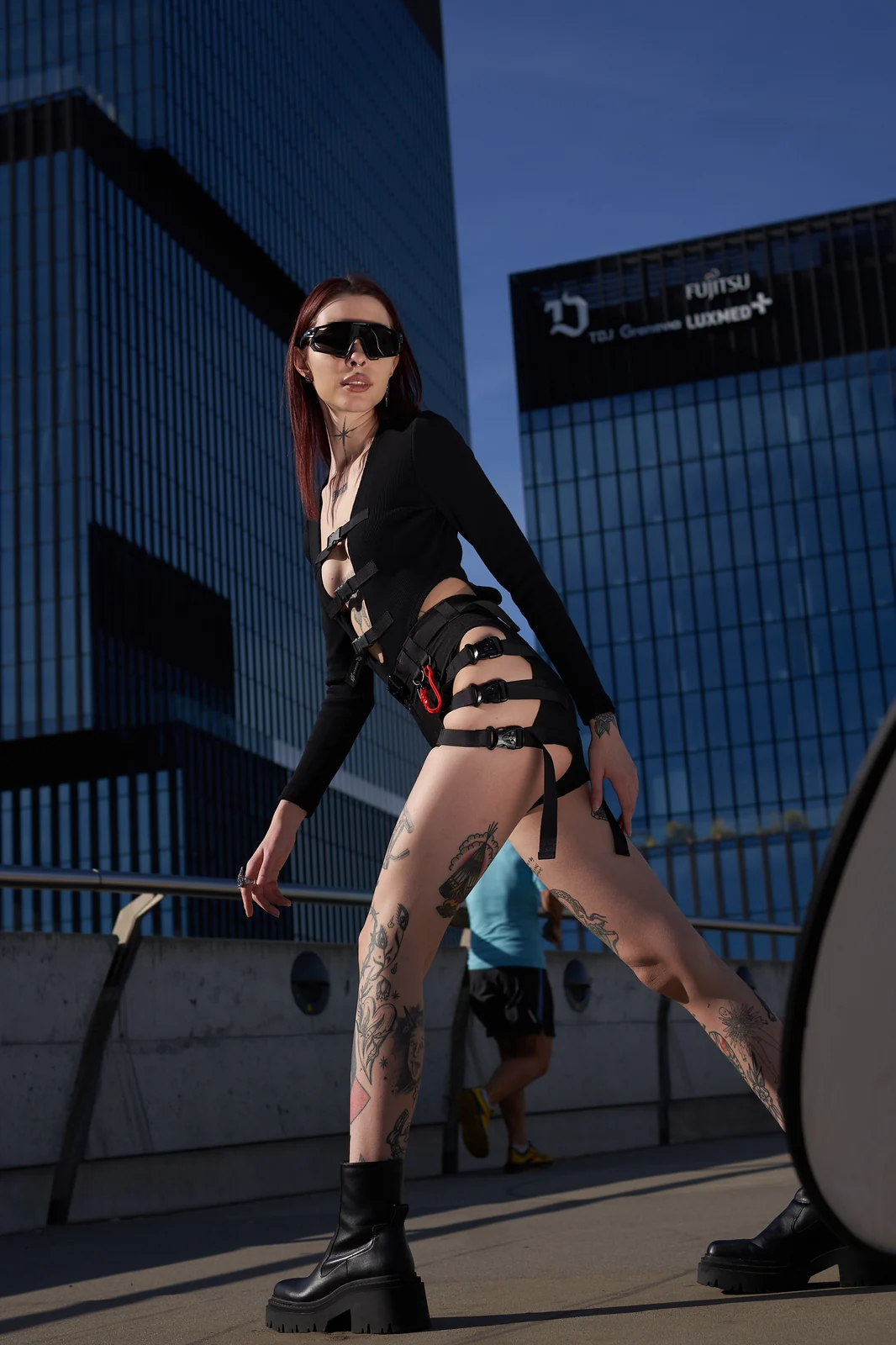
The campaign photograph includes accessories as part of its styling. You can borrow the relationship between the garments without recreating every element of the image. Let the everyday version start with clothes you actually want to wear.
Make the layer edges visible
Layering becomes easier to read when the pieces end in different places. A shorter open layer can frame a longer T-shirt. A long top can cover the waist while leaving the lower leg as the clearest area of shape.
Try two lengths before adding a third. Check them from the front and side, including where the underlayer gathers. If several hems land at almost the same point, they may create a thick band instead of the separate lines you intended.
A small visible strip can be enough. You do not need a large contrast in colour for a layer to register; a different surface, a clear edge or the space between panels can do it.
Give wide trousers room to move
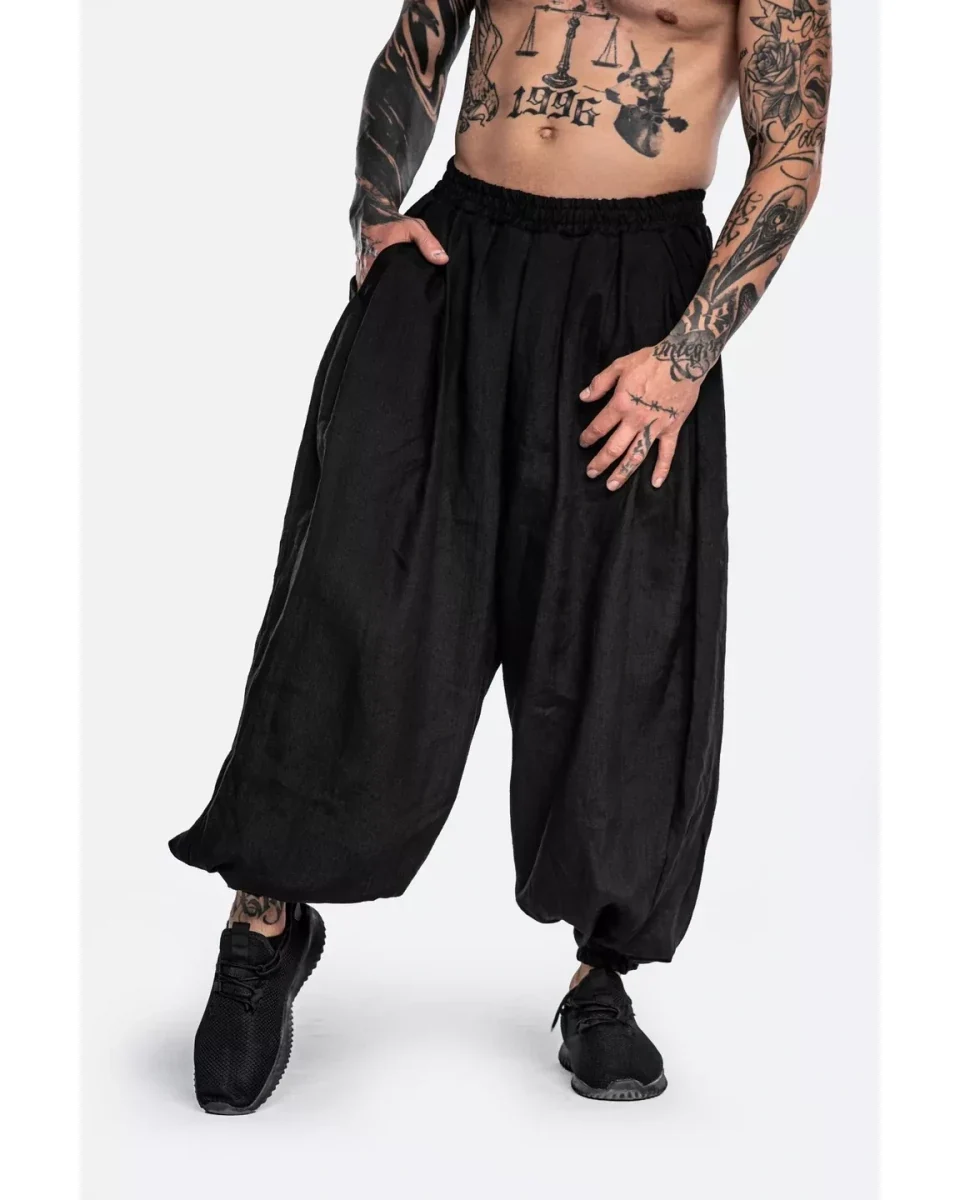
A broad leg can be the centre of the outfit. Check the waist and rise first, then look at how the fabric falls from the hip. Notice whether the volume stays fairly straight, gathers at the ankle or forms a curved outline.
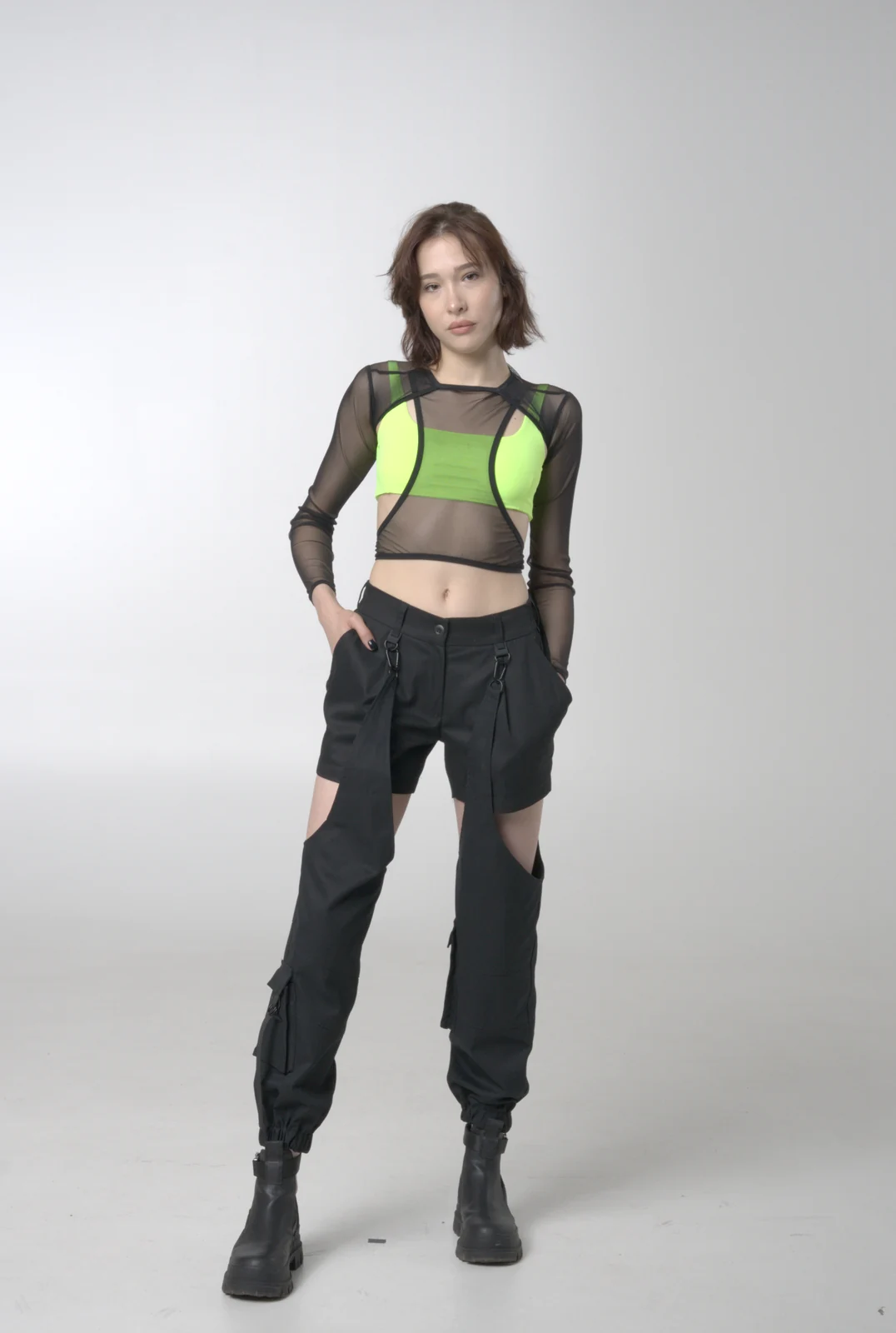
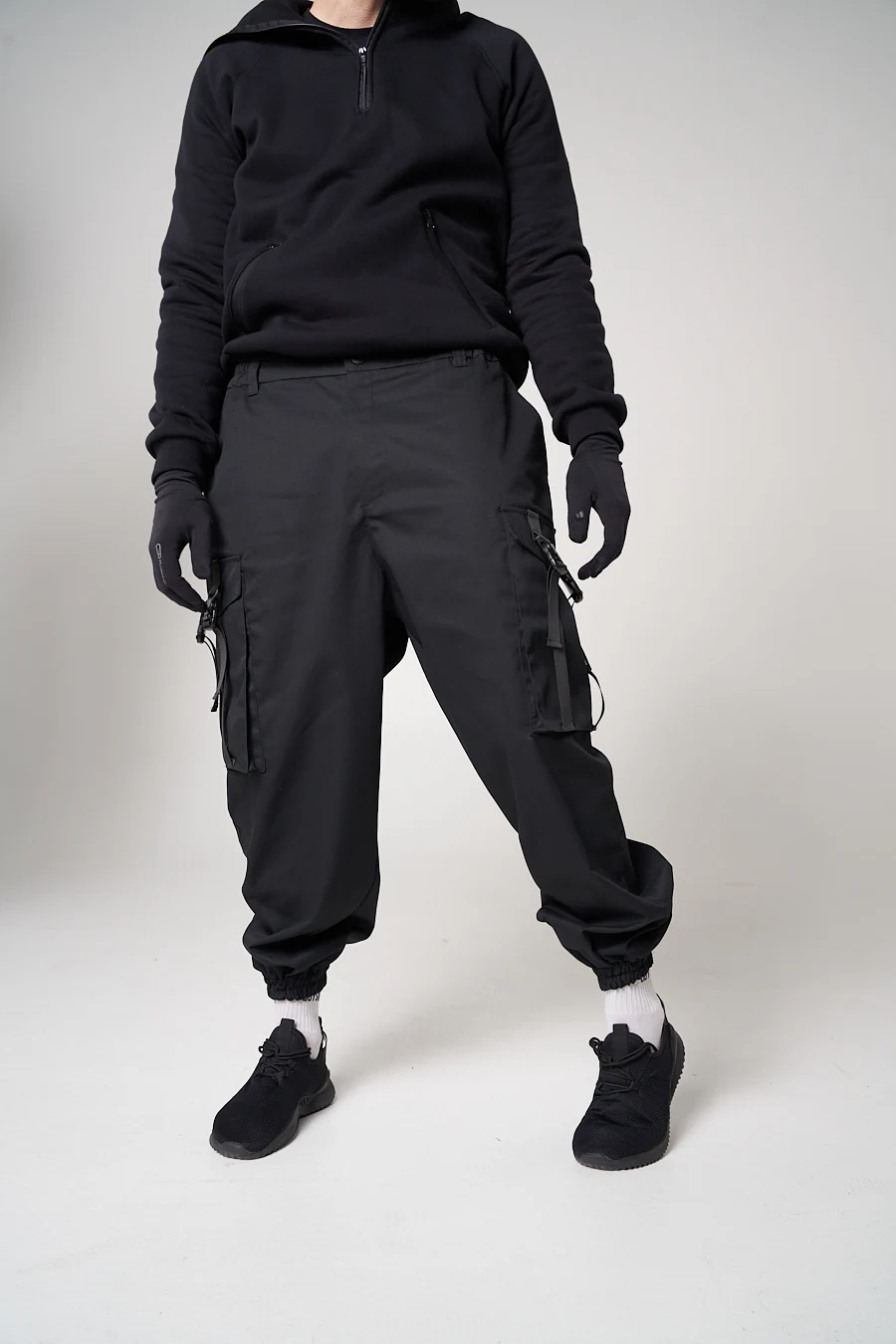
Compare techwear pants through those shapes as well as their pockets. Two black pairs may have very different proportions. Substantial side pockets can widen the leg in one place; a simpler surface lets the full length read more continuously.
Use your actual footwear when judging the hem. A shortened leg can leave the ankle area visible. A longer cut may meet the shoe and fold above it. Choose that relationship deliberately, then check it while walking and sitting.
Start with one of two combinations
A short outer layer over a generous leg
Wear a simple T-shirt beneath an open or buckle-fastened layer, with wide trousers below. Keep the T-shirt's length controlled enough that you can still see the relationship between the outer hem and the waistband.
First try it without an extra bag across the chest. Then add the bag you use and look again: its strap may create a new diagonal across the front or cover the closure. Keep it if that line contributes something you want.
A longer top over a more restrained lower shape
Let a longer top or techwear hoodie lead through its body length or hood. Compare it with a lower shape that leaves the upper volume clear. A straighter leg can produce a different balance from a very wide one.
If you prefer volume above and below, keep a clear point between them: a shorter front hem, a visible waist section or a distinct change of surface. The outfit can be expansive and still have an outline you can read.
Use black through texture and space
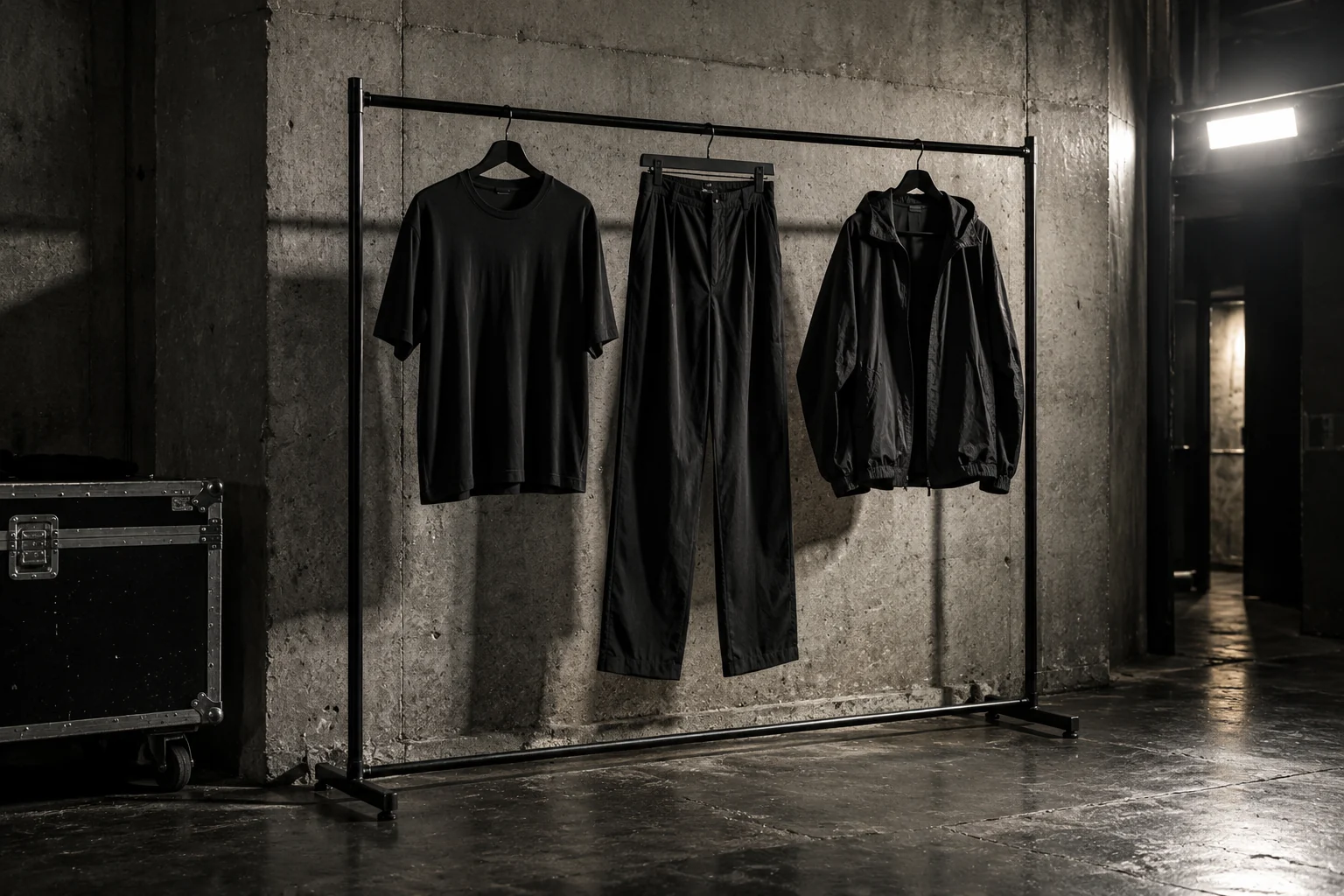
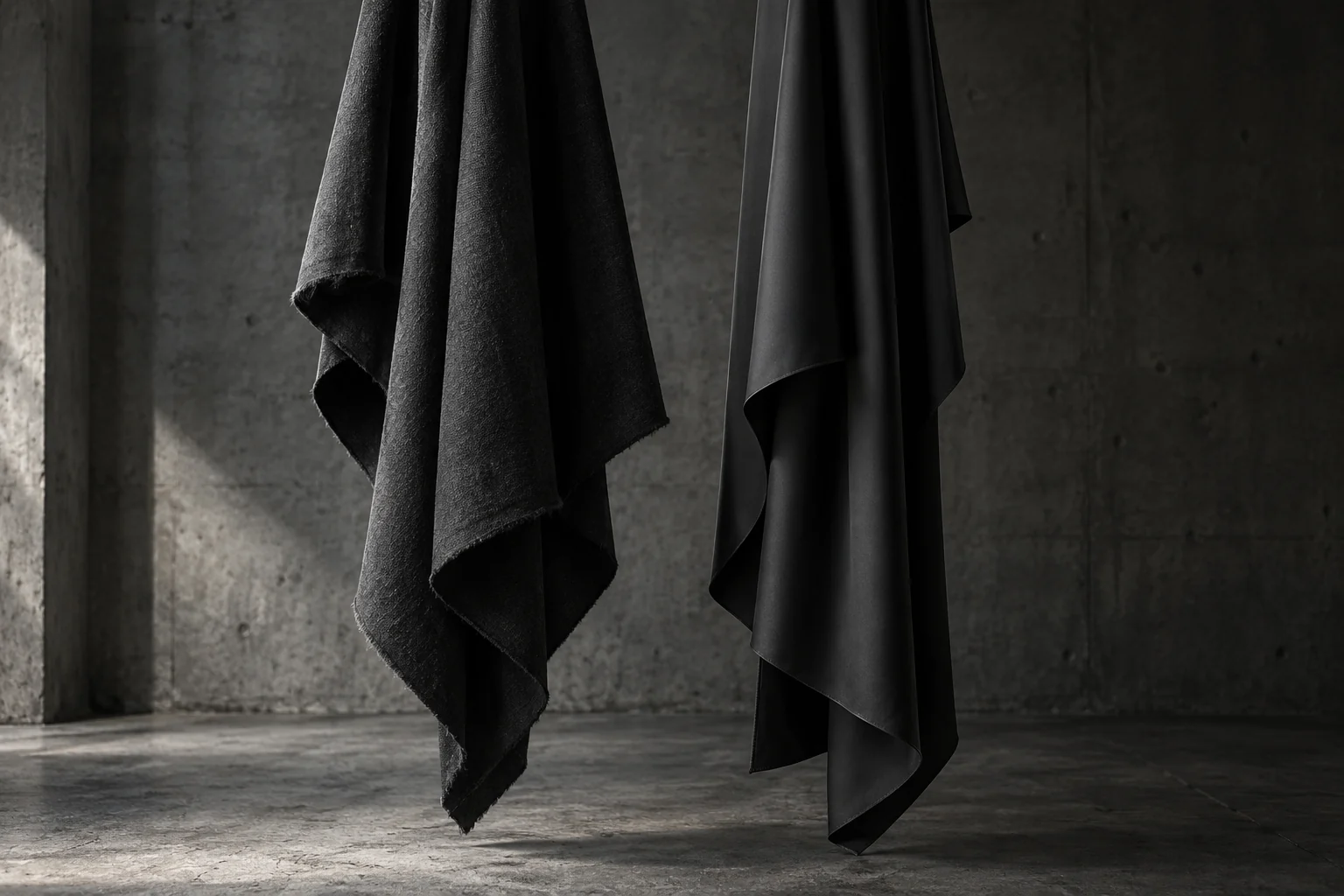
In an all-black combination, the difference between layers may come from their surfaces and the way they hang. A closer base beneath a looser panel creates a visible change in depth. A pocket flap introduces a smaller shadow inside a broad shape.
Look at the clothes in ordinary daylight as well as under strong indoor light. Details that are prominent in a campaign photograph may be quieter in person. Choose the version you like under the conditions where you will wear it.
Baggy cargo pants offer another way to introduce volume and pocket structure. Keep the upper layer relatively plain for a first comparison, then decide how much construction to repeat above the waist.
Make it an outfit you can keep wearing
Move through the things your day contains: reaching for a bag, sitting down, putting another layer on. Check wide sleeves beneath a coat and notice any loose part that catches. Use closures and adjustment only in the ways intended for that piece.
Keep the shapes that work for you. An inspiration becomes useful when it gives you a new way to arrange the clothes, rather than a whole image you have to reproduce.
For a more function-led starting point, read how to build your first techwear outfit. For a closer look at the lower silhouette, continue with styling black cargo pants.