
Winter Rave Outfits: Dressing for the Queue and the Room
The street and the dance floor ask different things of an outfit. Build around a base you can wear inside, then plan the layers that get you there and home.
The room is warm. The pavement outside is not. In winter, an outfit has to survive the space between them: travel, the queue, the cloakroom and the way home.
Build a winter rave outfit around an indoor base, removable layers and an outer layer suited to the actual forecast. Decide where those layers will go before you leave. A strong silhouette is easier to keep when you are not carrying an unplanned bundle all night.
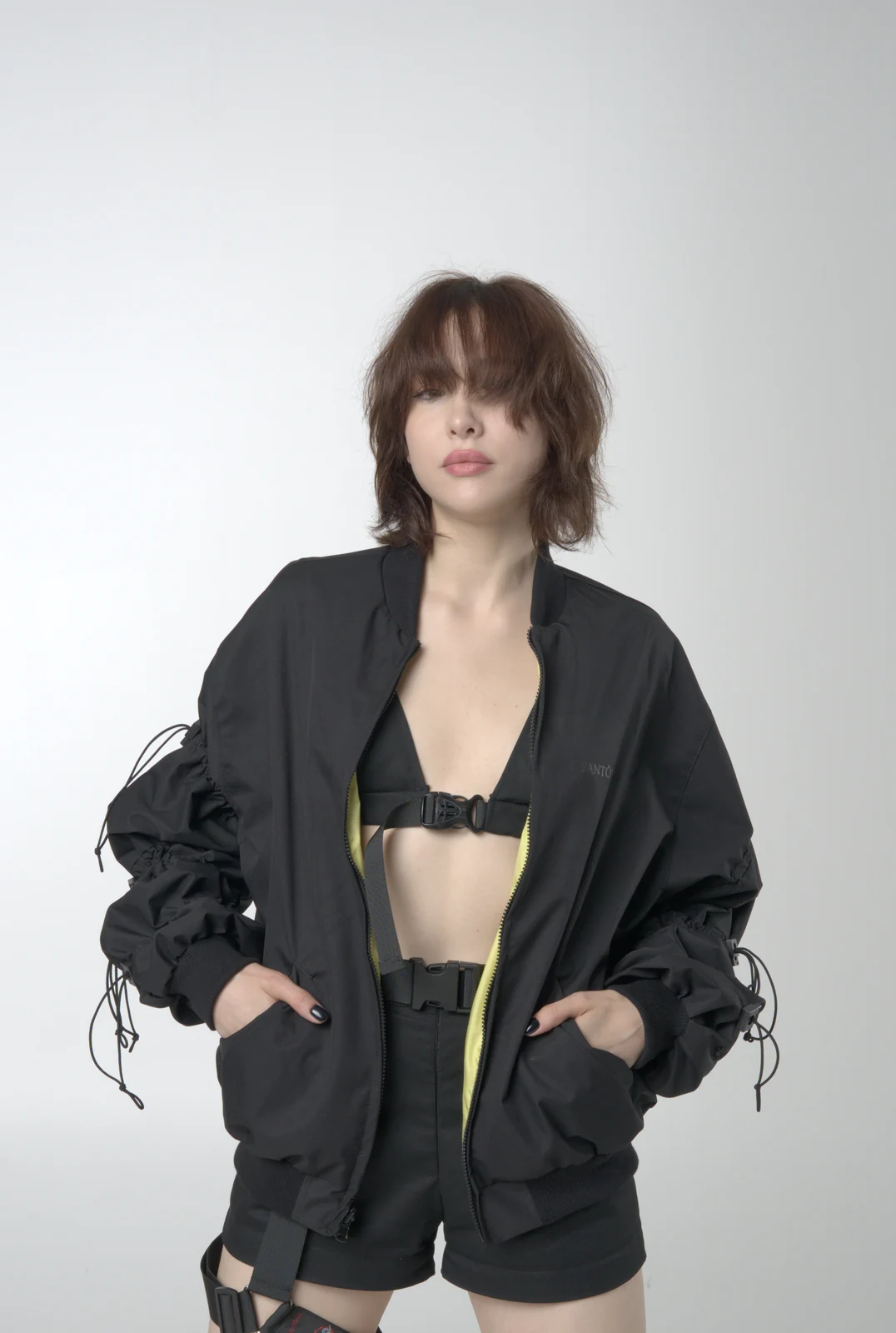
Plan the route before the layers
Look at the whole evening. Are you walking to public transport, waiting outside and walking again after the event? Or moving between a vehicle and a short entrance queue? The clothing you need depends on those stretches as well as the room.
Check the forecast for the return journey, the organiser's entry instructions and whether coat storage is available. Confirm its opening hours, payment arrangements and any limits on bags. A cloakroom that is full or closes before your journey starts can change the plan.
If the event is outdoors, treat it as an outdoor event throughout. An indoor layering formula does not establish that a fashion jacket is sufficient for prolonged cold, rain or wind. Choose garments with the relevant stated specifications for the expected conditions.
Choose the outfit you want to wear inside
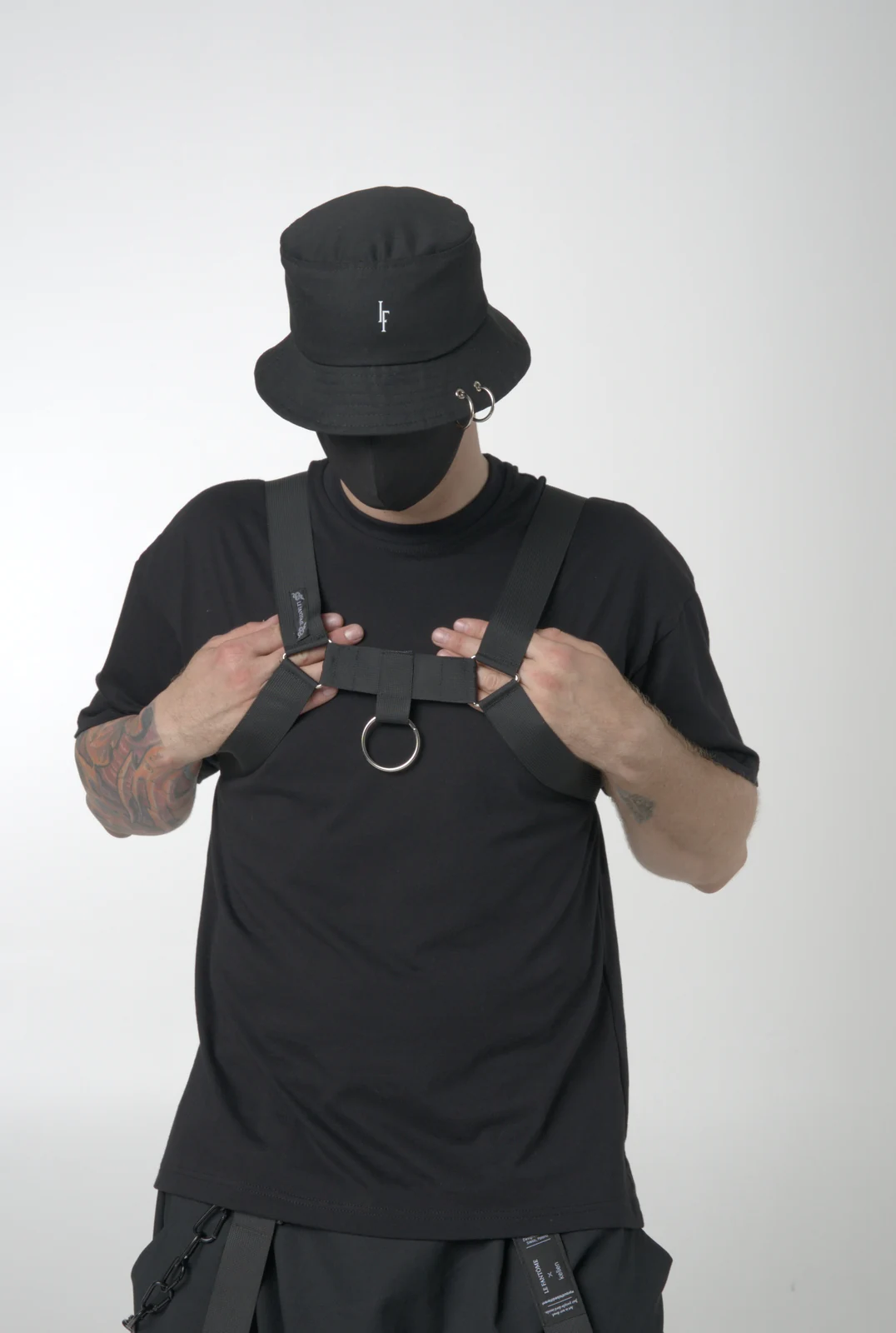
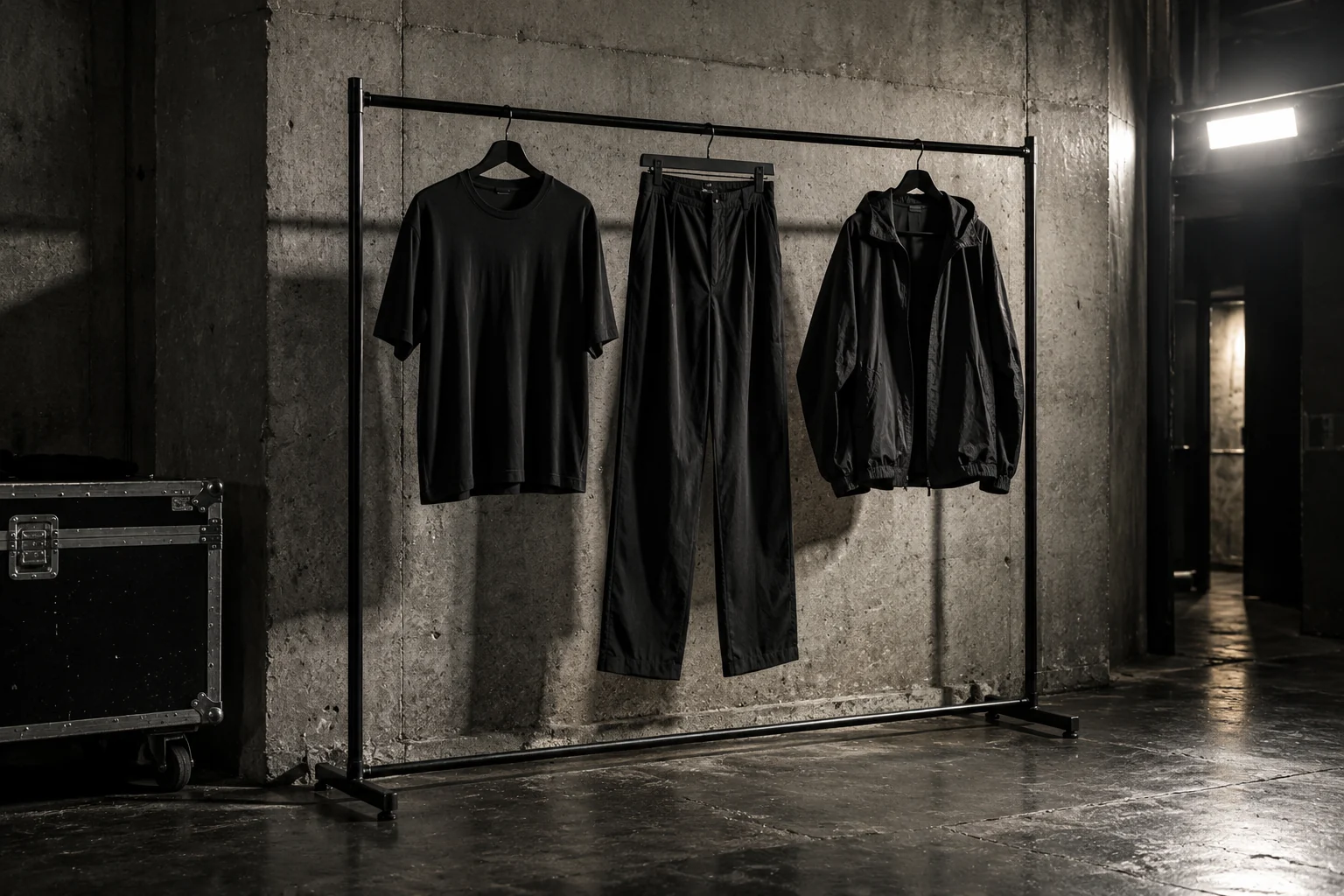
Start with the layer that remains after the coat comes off. It might be a plain T-shirt with cargo pants, a body with a skirt, or a cropped top beneath a loose outer shape. Try this version on its own before adding winter layers.
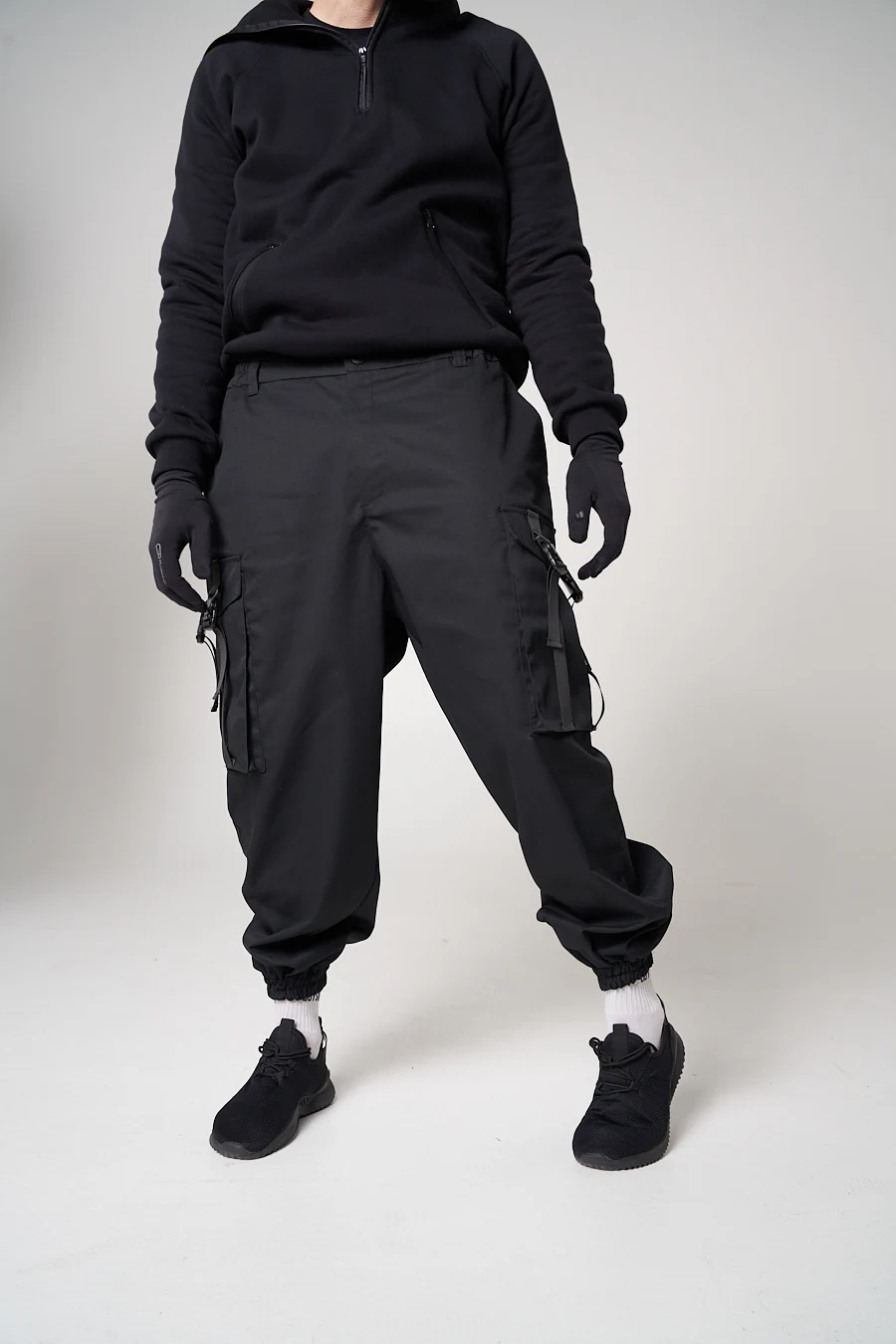
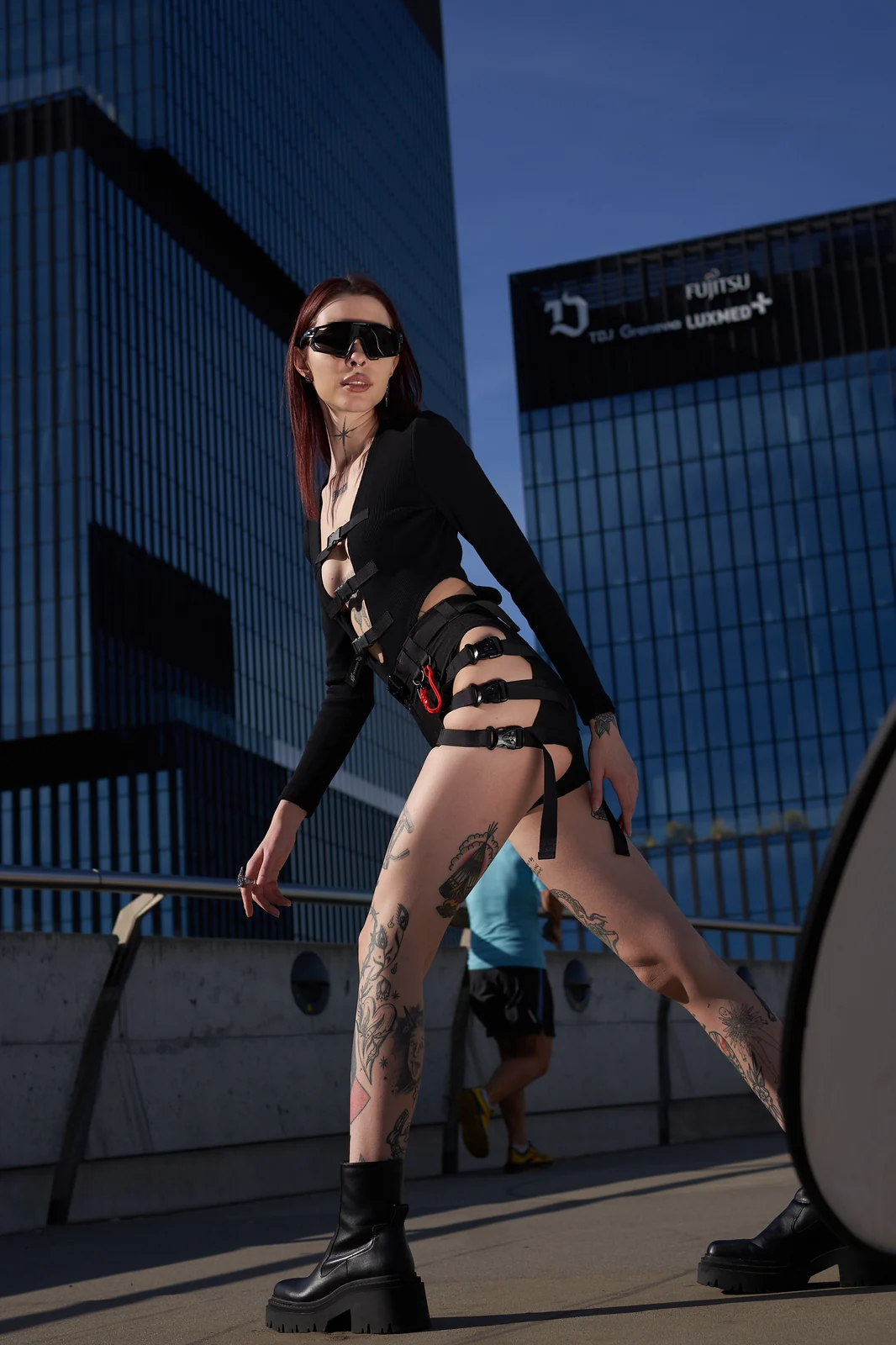
Make the lower silhouette deliberate. Wide trousers put volume below the waist; a narrower leg leaves more attention on the upper body. If your base has cut-outs or mesh, judge it with the exact underlayers you will wear. Their edges and colour will remain part of the outfit.
Think about what happens to pockets when you remove the coat. Keep the things you need regularly in a place that stays with you and closes as intended. Test access while wearing any bag or belt.
Add a middle layer you can remove
A hoodie can connect the indoor base to the coat, but check the combined shape. A large hood beneath a high collar may bunch at the neck. A close sleeve under another close sleeve can restrict movement even when each piece fits separately.
Compare rave hoodies by the space they leave around your base and the room they need under the outer layer. Raise your arms, reach forward and close the coat. Use the actual combination, including any hood or collar.
Then decide whether the middle layer goes into storage with the coat or stays with you. If you plan to carry it, try the folded size in your allowed bag. A layer is removable in practice when you have somewhere useful to put it.
Choose the outer layer for the conditions
Length, closure and fit matter alongside the material specification. Check the coverage when the jacket is closed and when you sit down. Notice whether sleeves pull back from the wrists or the hem rises above the layers beneath it.
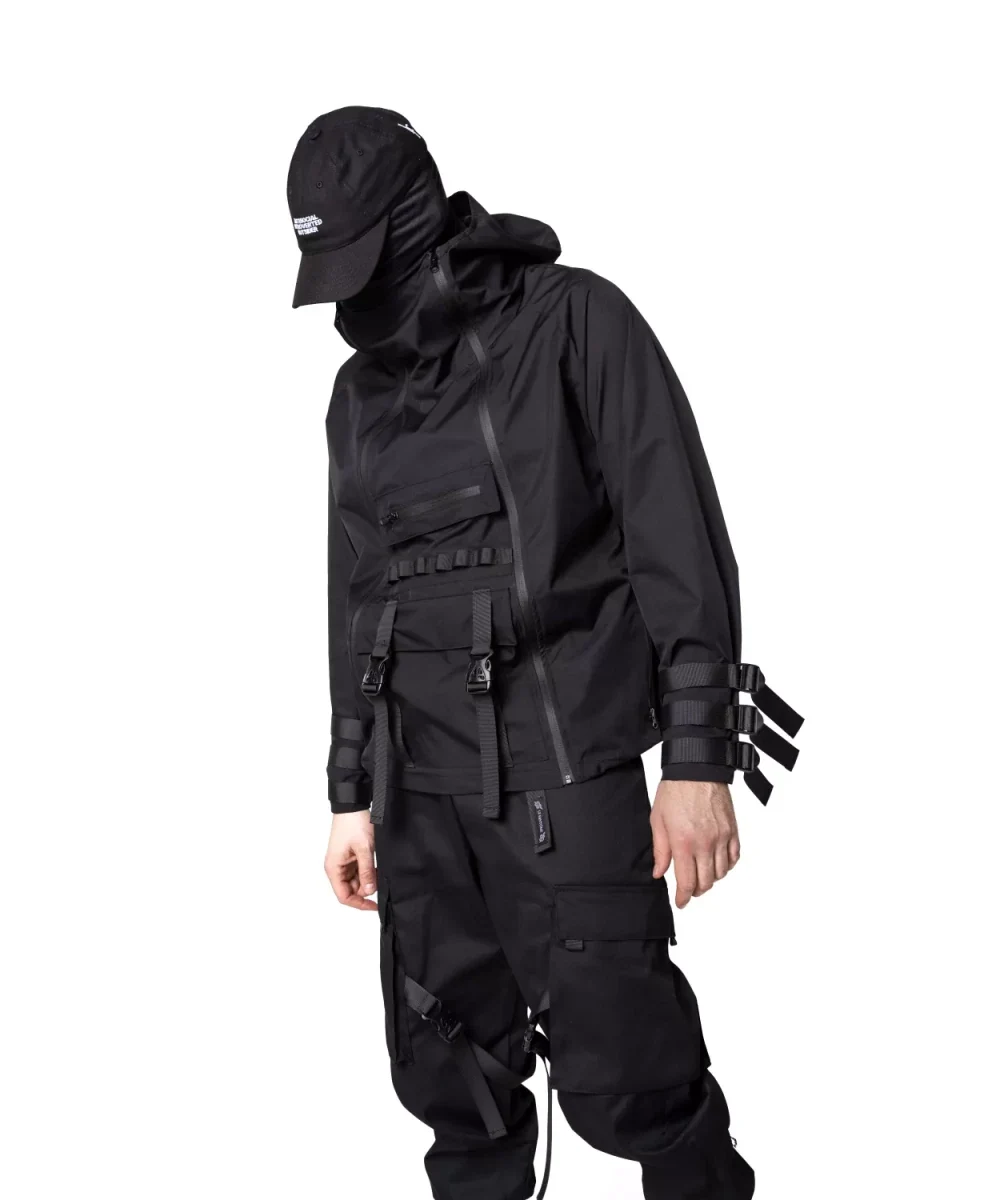
Rave jackets can give the outfit a clear shoulder line or a substantial collar. If weather performance is part of your decision, read the particular product description. A dark surface, large hood or technical appearance does not by itself establish warmth or water resistance.
Apply the same check to a techwear jacket. Separate the construction you can see from the protection the manufacturer actually specifies, then choose what the journey requires.
Think about the lower half, too
For rave pants, check the whole length with your chosen footwear. A long hem can meet wet pavement; a cropped hem leaves a different area exposed. Try sitting and taking a full step before deciding.
If you add an underlayer, check the trousers with it on. It changes the space at the waist, thighs and knees. Look for bunching near cuffs or under substantial pockets, and test whether you can still use each fastening comfortably.
Choose footwear you have already tried for walking and standing. Check the sole condition and its suitability for the route. Keep scarves, loose straps and other hanging details arranged so that they do not drag or catch as you move.
Make coat storage part of the outfit
Take a moment to decide what leaves the coat before it goes into storage. Transfer essentials deliberately, check the remaining pockets and keep the collection information where you can find it later.
Some garments have an internal carrying arrangement. Use one only where it is part of the actual design, following the product instructions. Check where the suspended garment sits and whether it interferes with walking, a bag or other people in a crowded space. It may suit a transition between rooms better than the whole night.
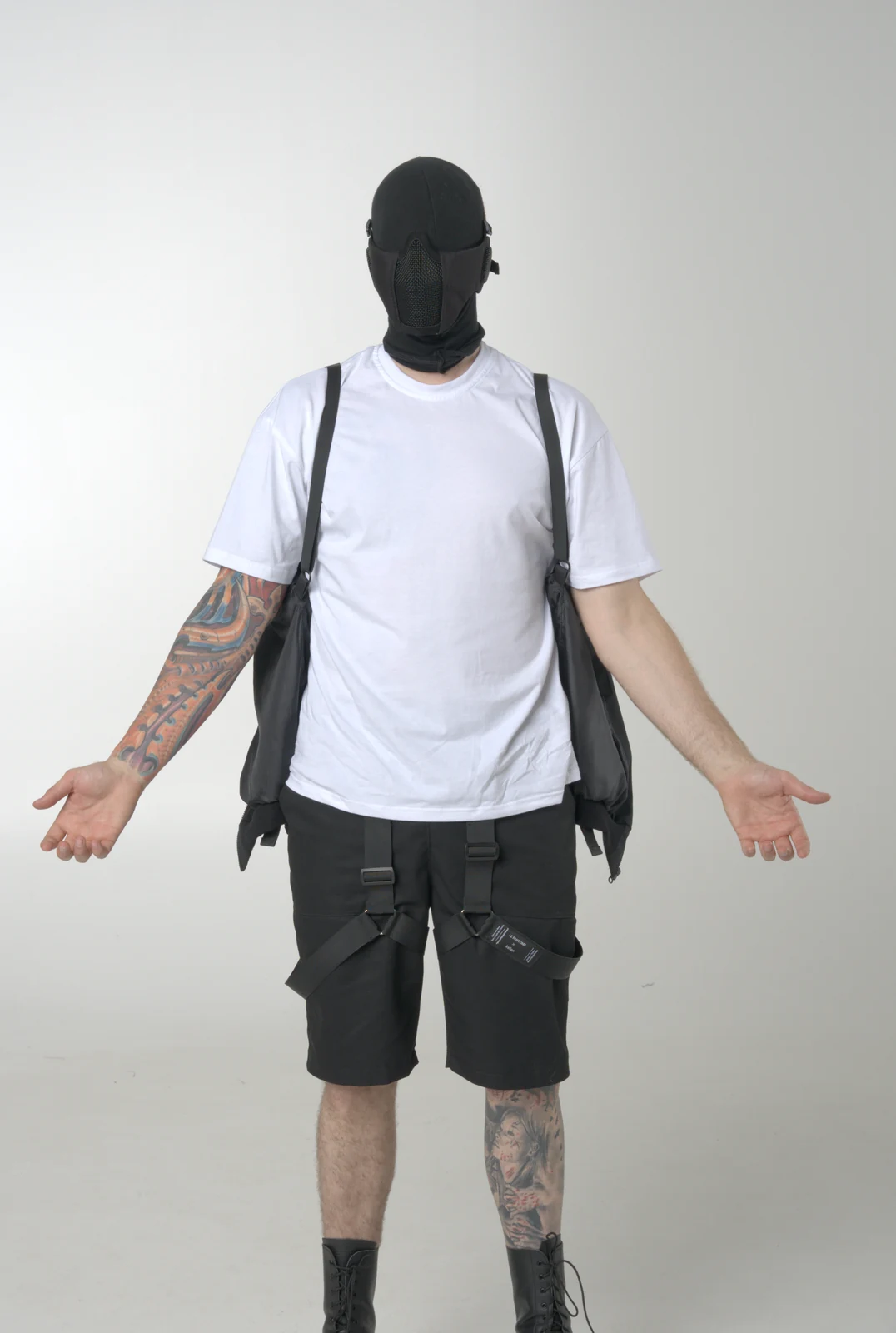
Prepare the way home before going inside
Have the outer layers ready before you leave the building. Check the return transport and any expected outdoor waiting time. The outfit you chose for the room is only one part of the evening.
- Check the forecast and entry arrangements.
- Try the indoor base separately, then the full set of layers.
- Confirm where the coat and middle layer will go.
- Keep essential pocket access after removing them.
- Test hems, sleeves and closures with the actual footwear and bag.
Start with the wider rave clothing selection when comparing shapes. For the basics of the night, read what to wear to your first rave. For a longer outdoor schedule, use the separate day-to-night techno festival guide.